Endangered animal

The red panda (Ailurus fulgens), with its captivating rusty-red fur and bushy tail, is an arboreal mammal endemic to the Eastern Himalayas. This seemingly adorable creature holds a unique distinction – it is the sole living member of the family Ailuridae (Pradhan et al., 2001). Despite its endearing appearance, the red panda faces significant threats in the WILD AND is classified as “Endangered” on the IUCN Red List (Wang et al. 2008). Their distribution is characterized by patchiness and low population densities throughout their range (Wei et al. 1999; Thapa et al. 2018). (Chapter 1 – Introduction: Red Panda Global Status and Distribution, RED PANDA STATUS IN BHUTAN National Red Panda Survey Report 2023)

Reduce, Reuse and Recycle: a phrase the “PERFECT generation” knows all too well, where we were TAUGHT to recycle and reuse to save our planet, combat climate change so we can live in a fresher, cleaner environment. As we were being taught how to “clean” we were told to care about wildlife, to recycle our paper and to start focusing on a digital economy, without any fossil fuel. Cleaning what the industrial revolution trashed, construction asbestos and lead filed paint. It was our job to live a more conscious LIFE; with rules our predecessors never had/have to care about. Plastic bottles, tupperware and utensils took over to where we have microplastics in our bodies, as well as battery residue from all of what we digested and powdered. The “perfect generation” sickened by compromising their comfort for the safety of the world and chasing reusable designs to create sustainability, just to be rejected by those who practice a wasteful existence.
During my time in Architecture school I focused on designing LEED certified buildings with solar powered electricity and construction material specifically made out of “green” construction material. The focus was to create sustainable architecture merging with nature, instead of embarking on nature. To the surprise of my GENERATION, we were not able to utilize any of our designs in real life, because investing in them was deemed as “LUXURY designs” while firms continued to BUILD sore-eye glass buildings and modular cubes calling them “luxury apartments” that would start deteriorating after three years of constructing them.
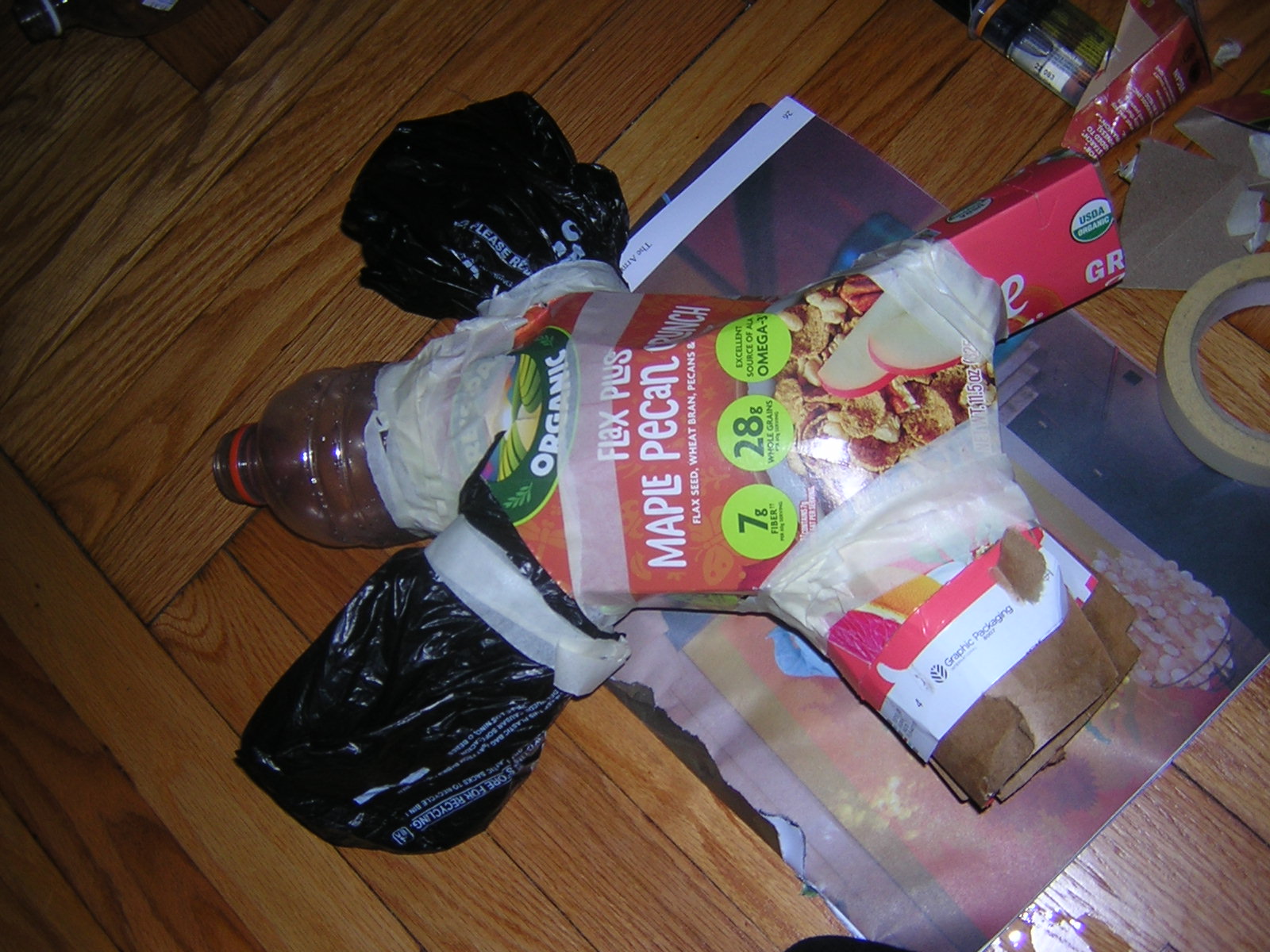
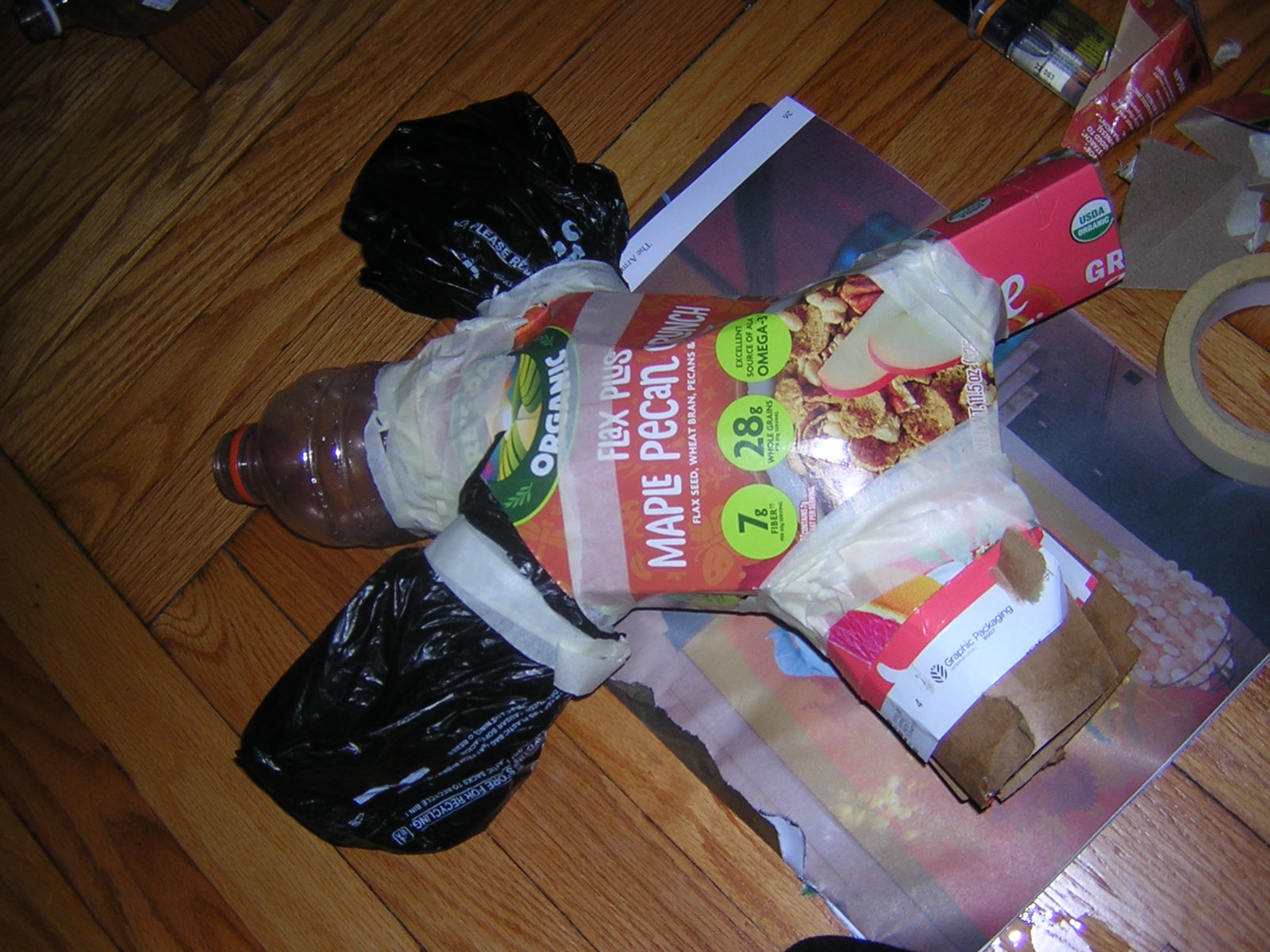
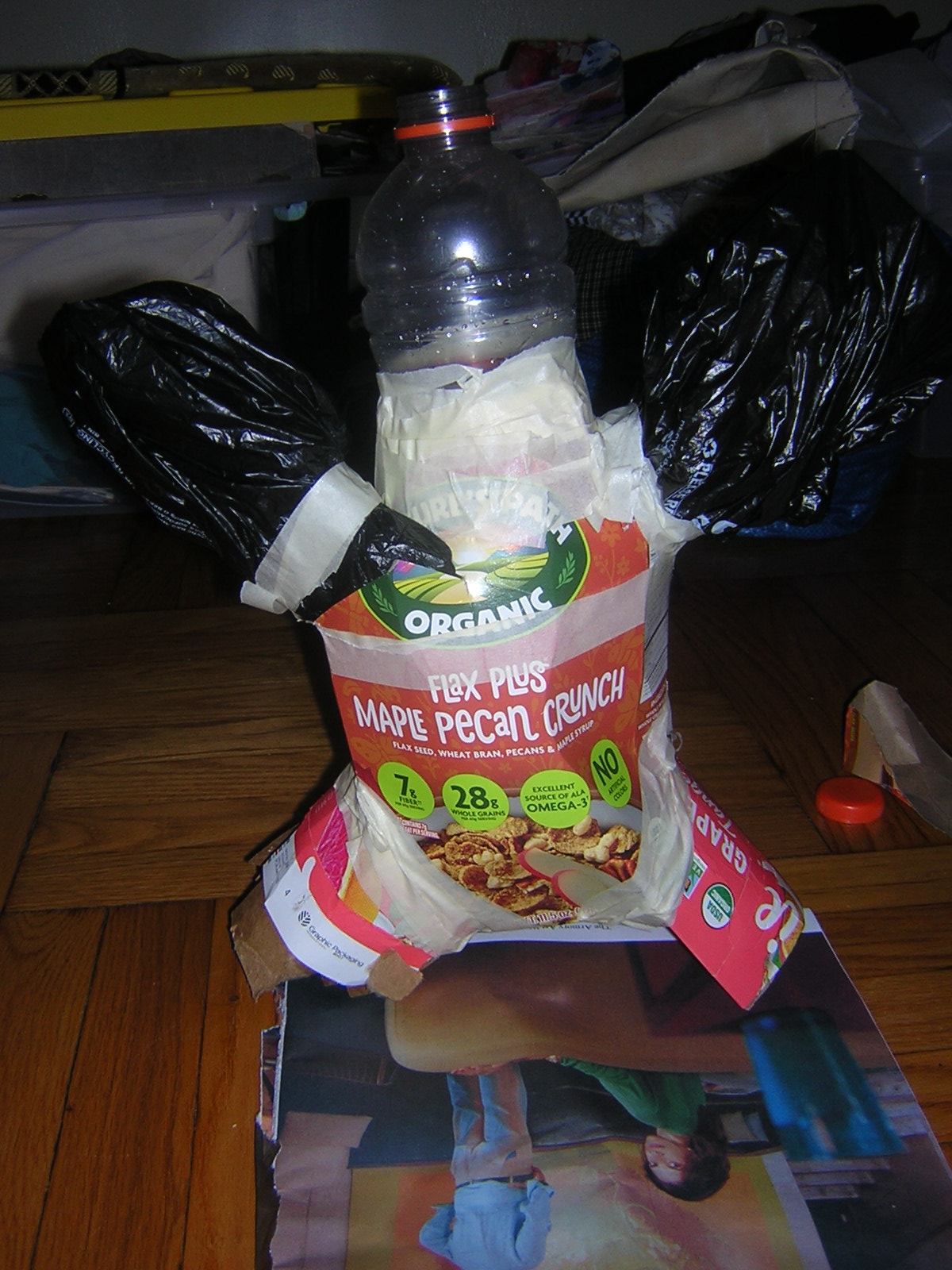
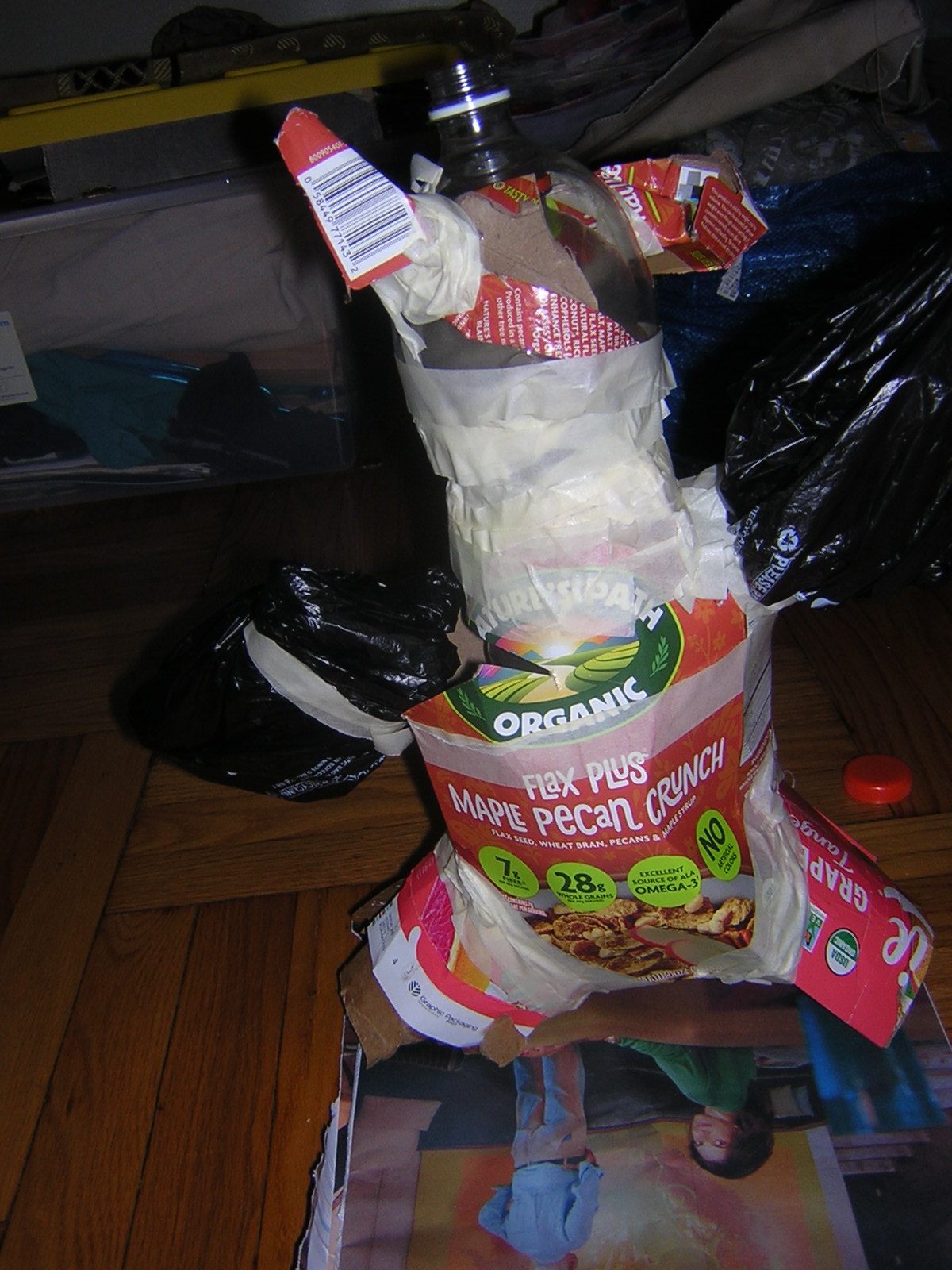
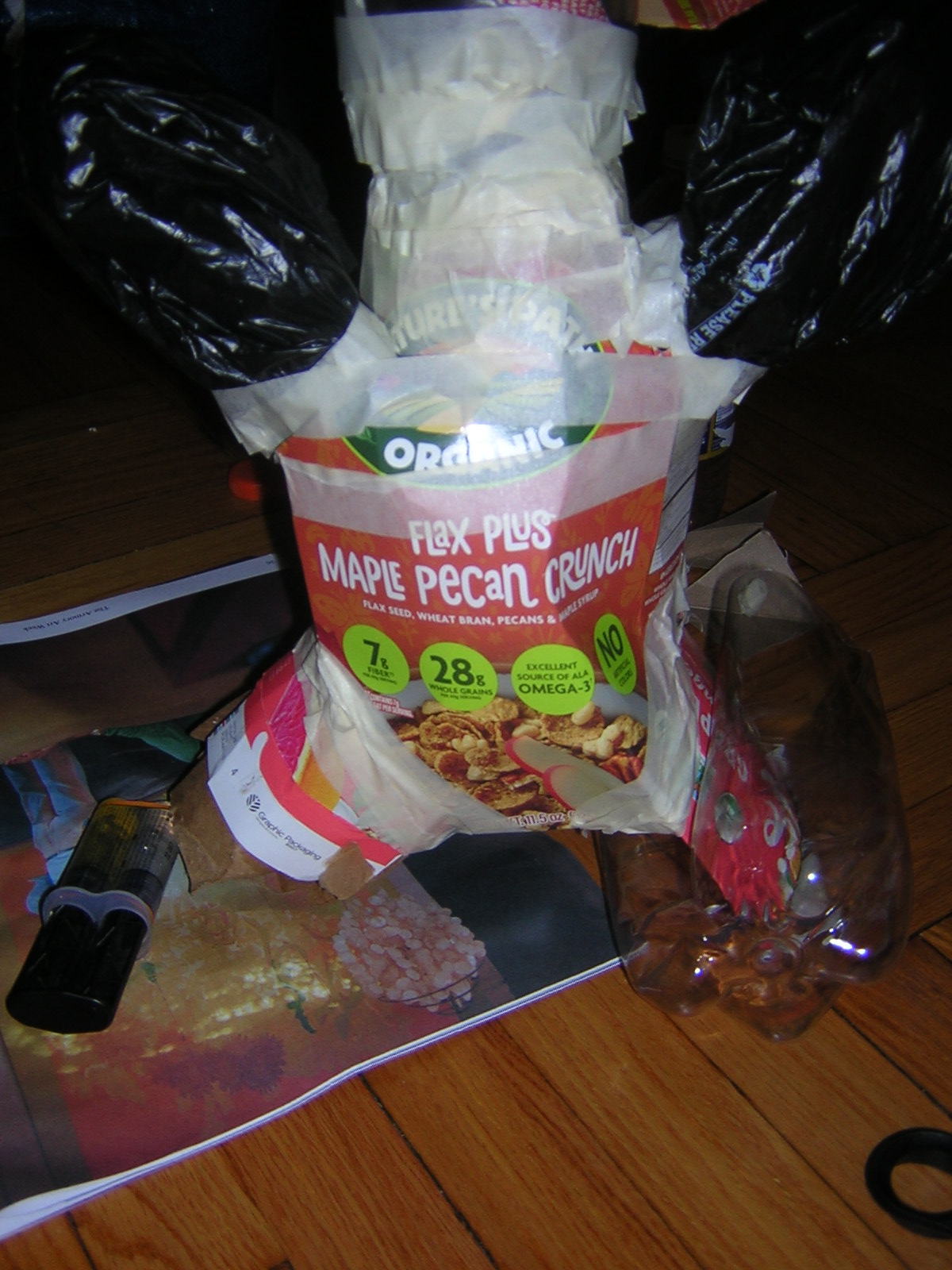
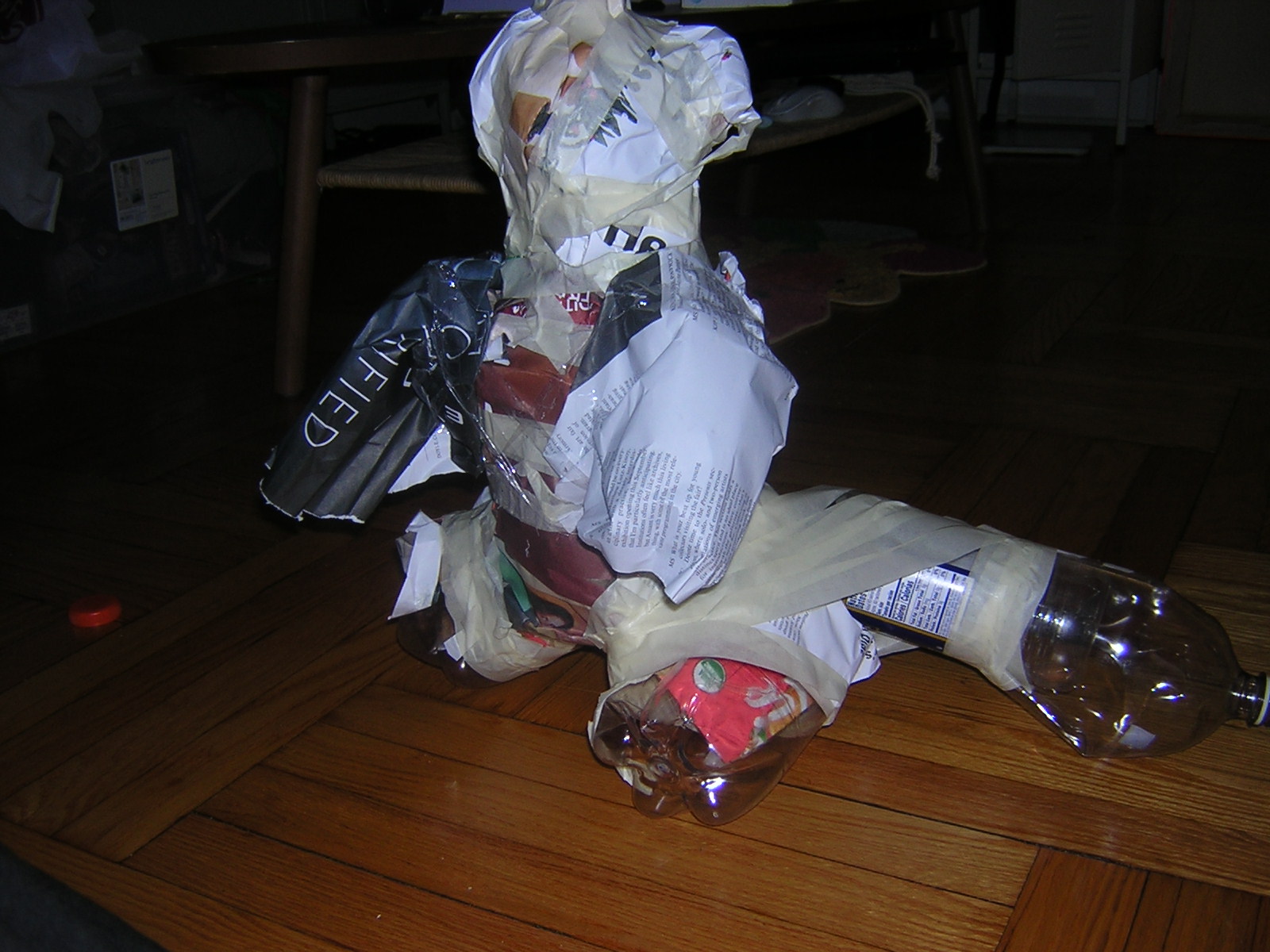
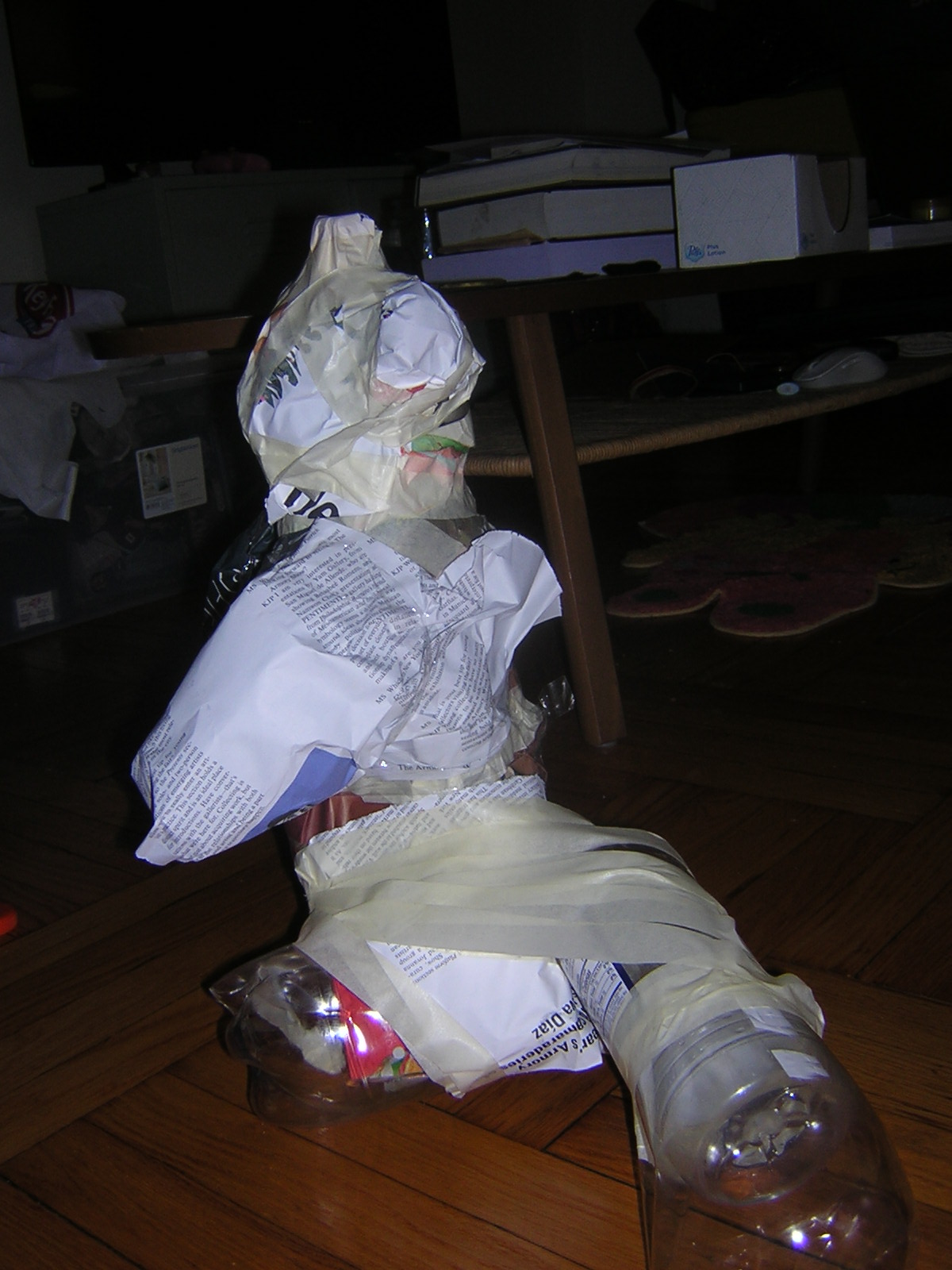
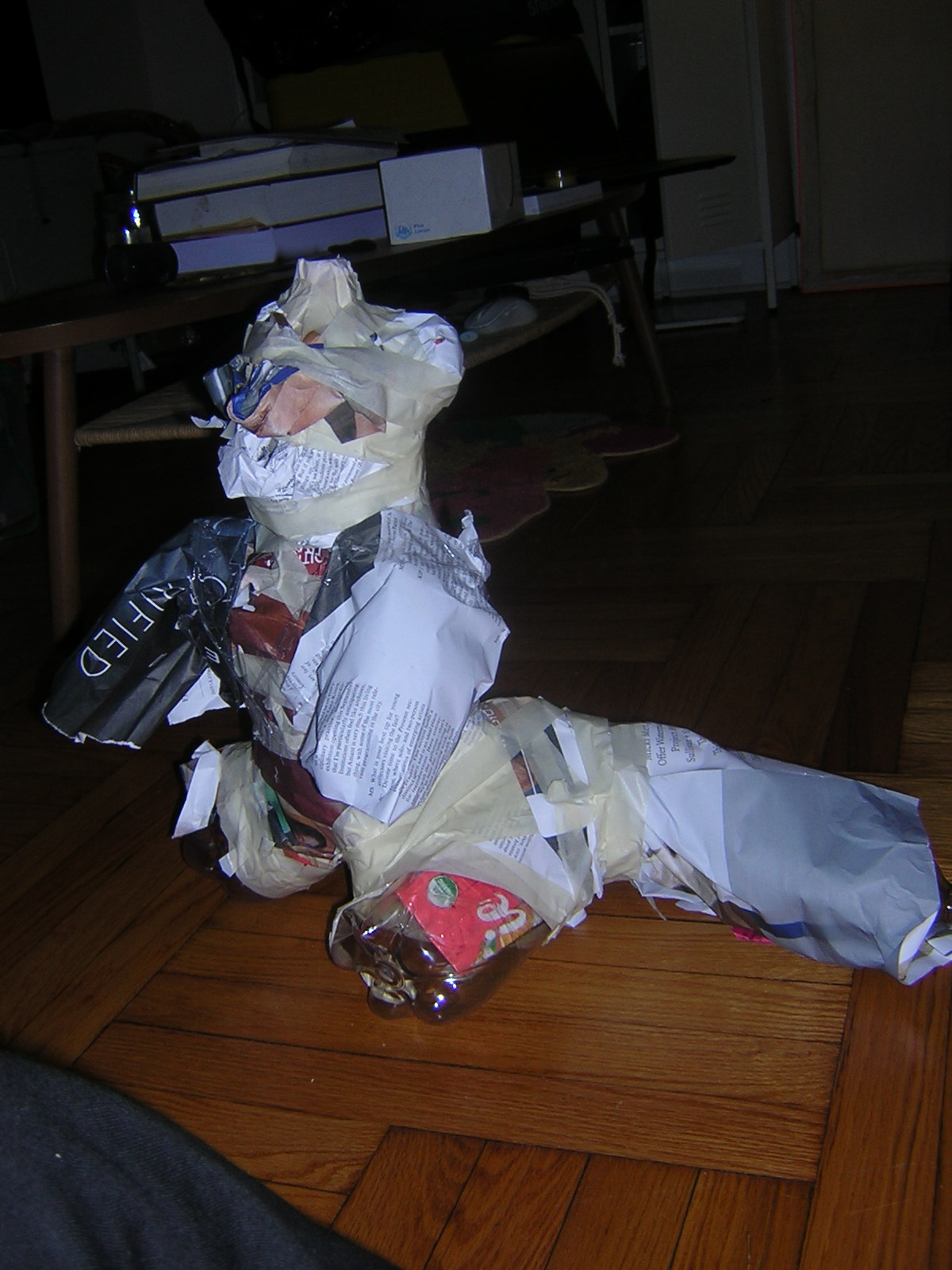
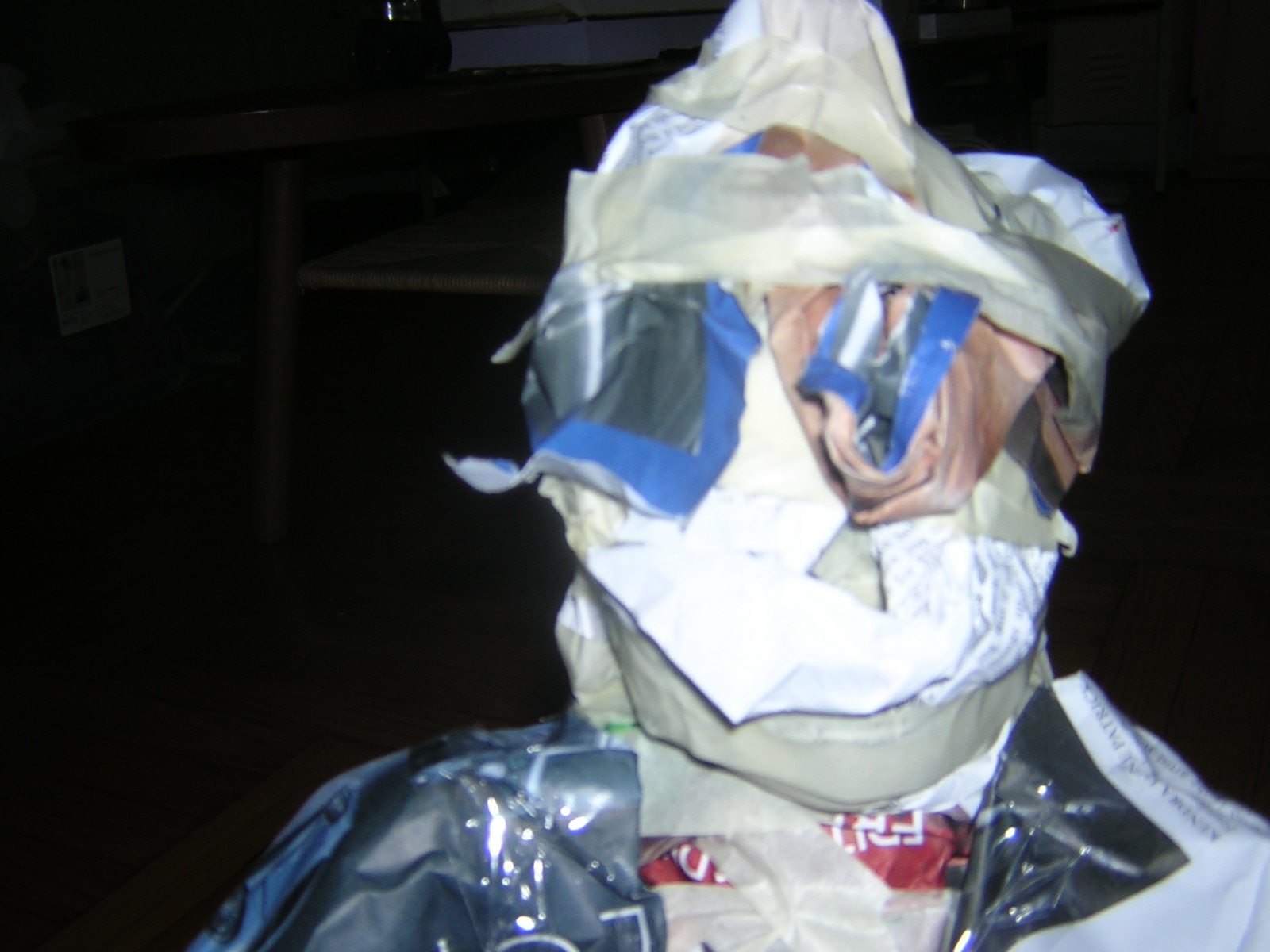
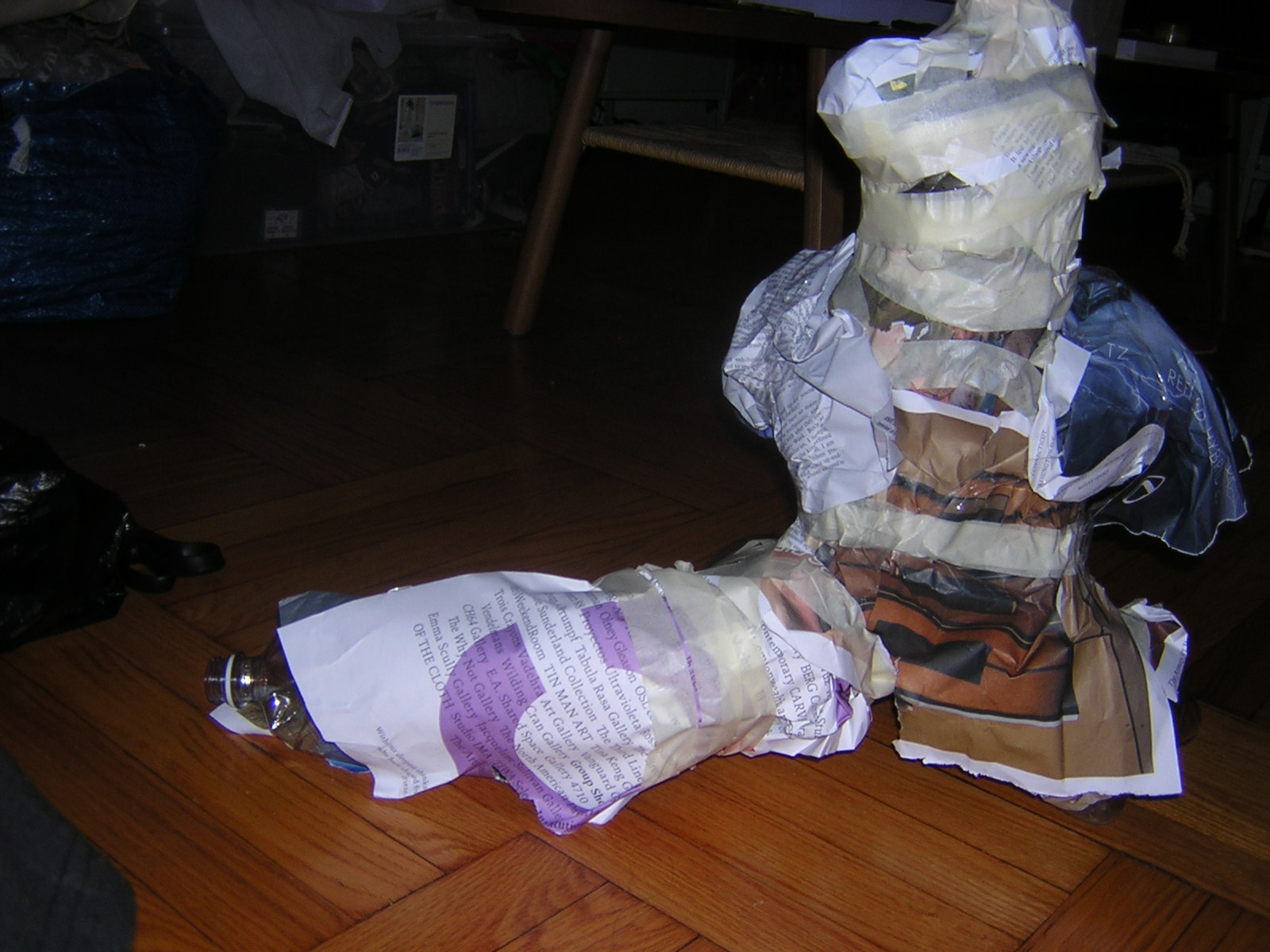
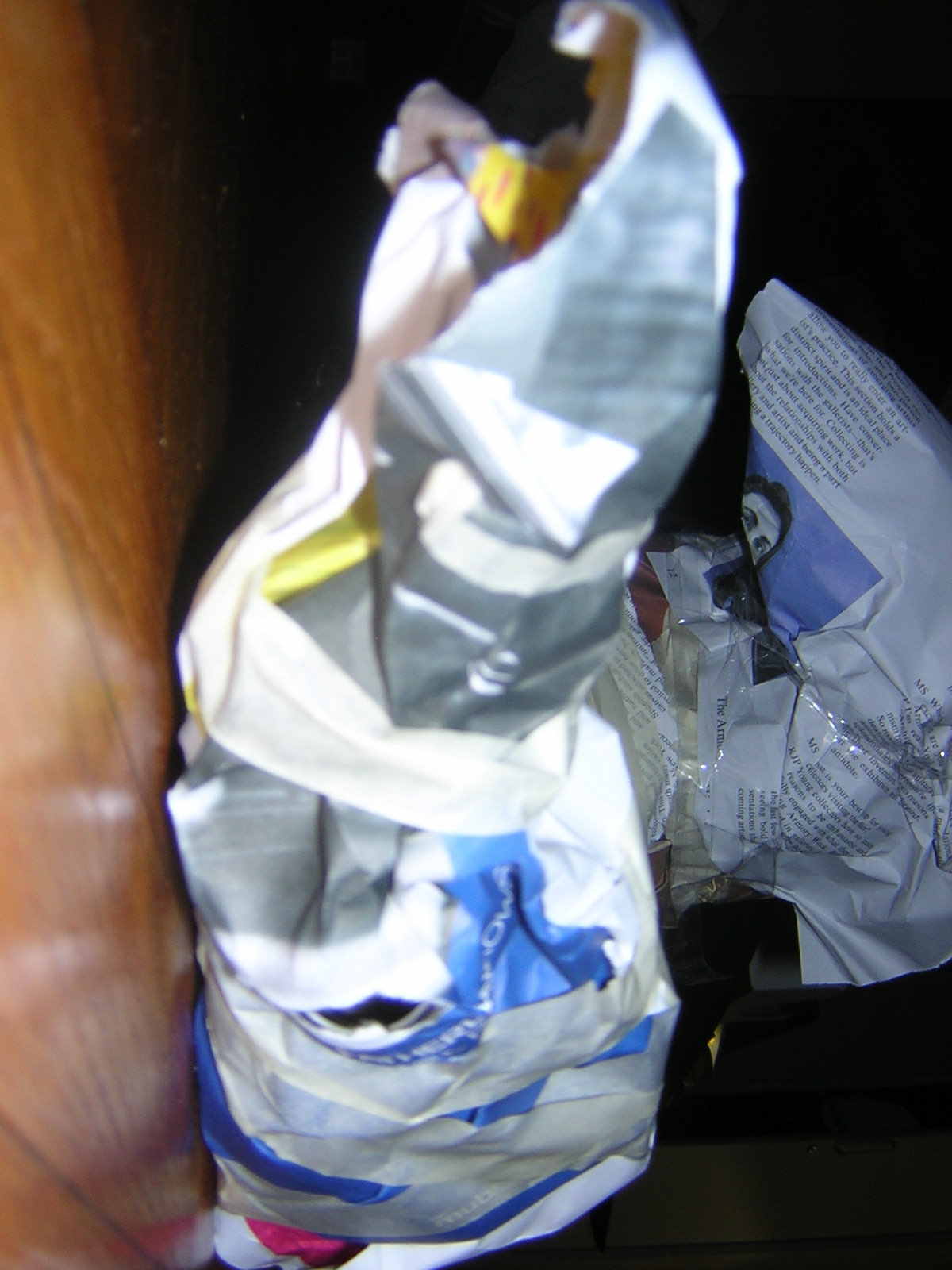
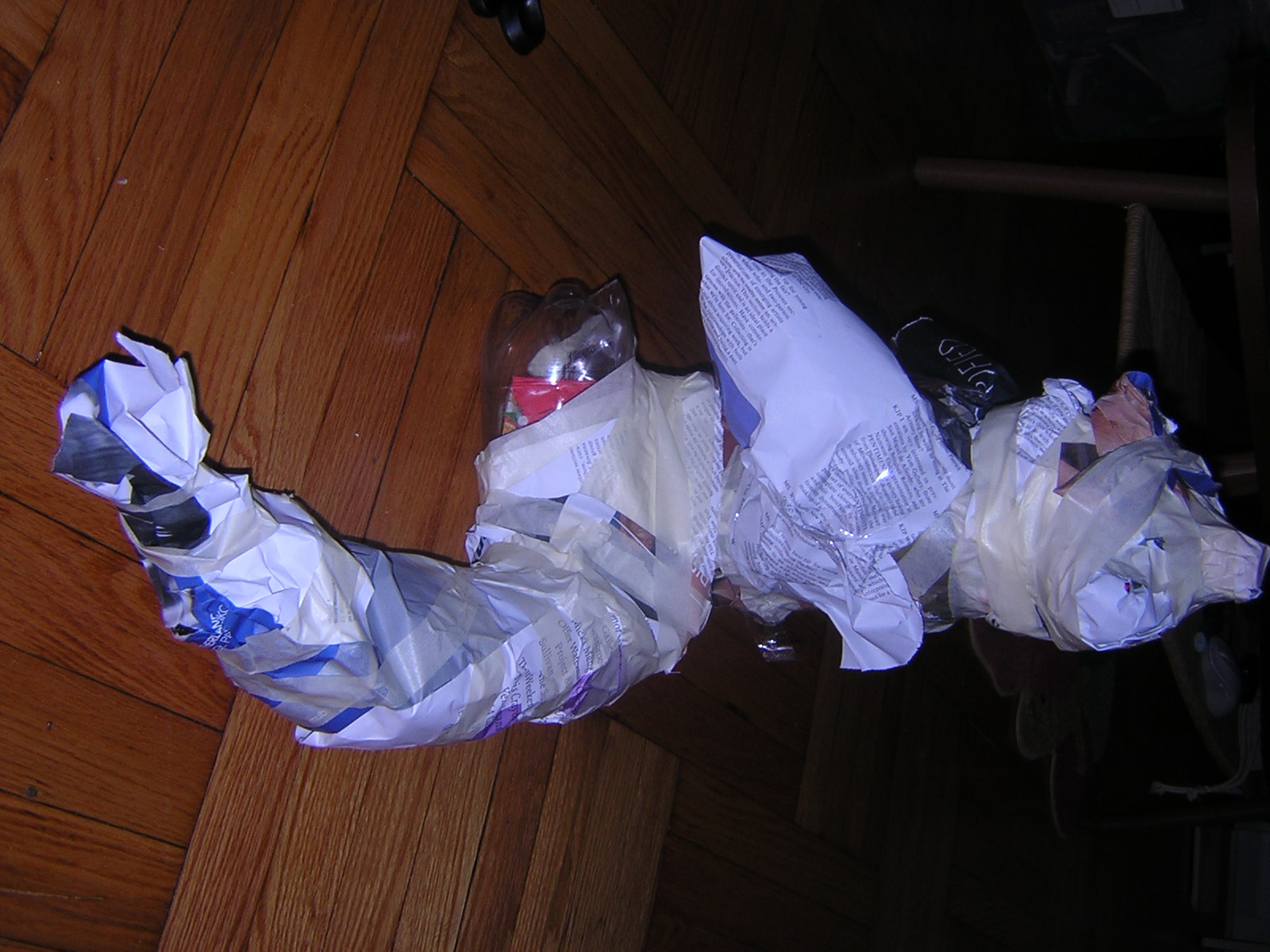
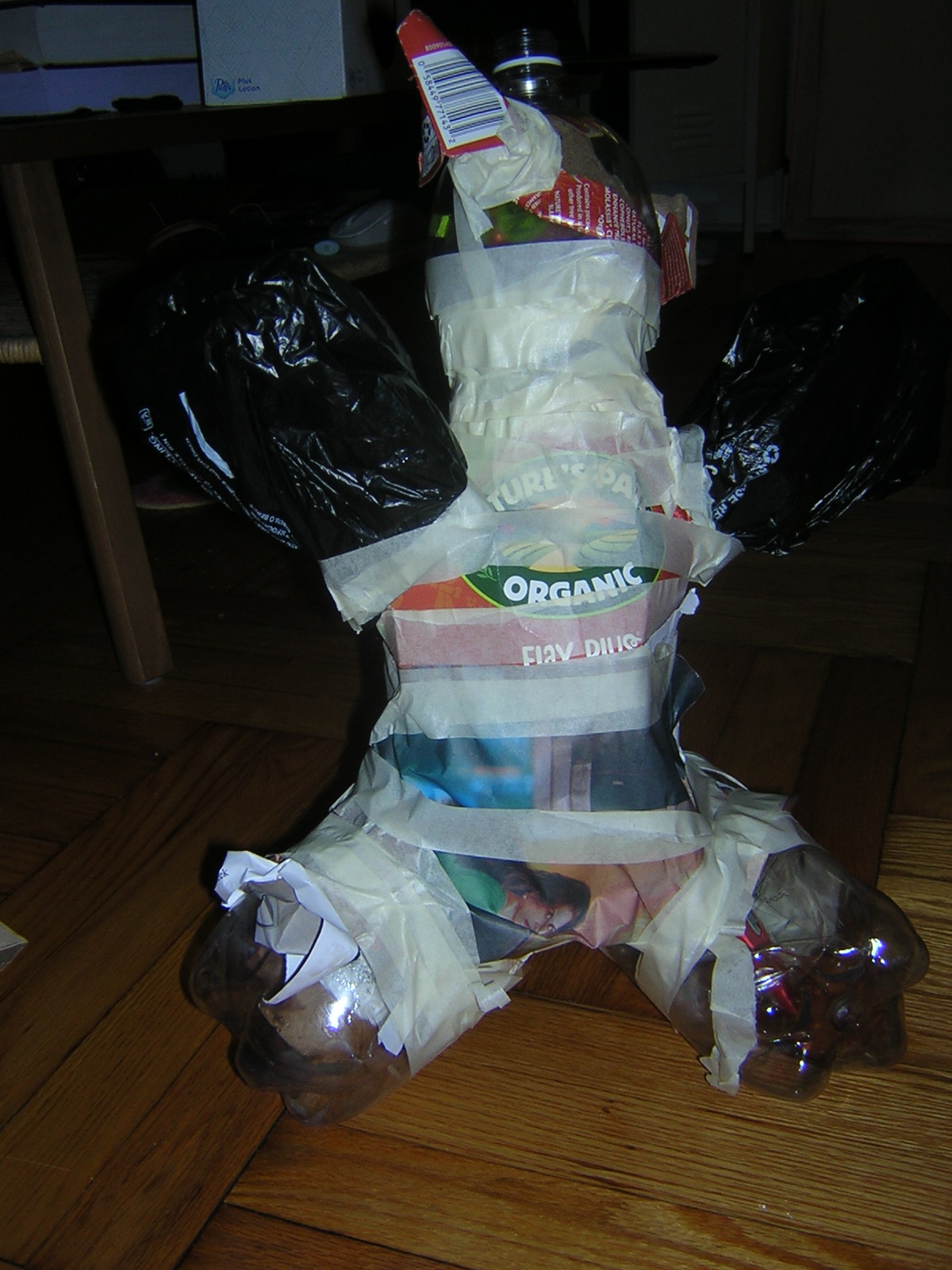
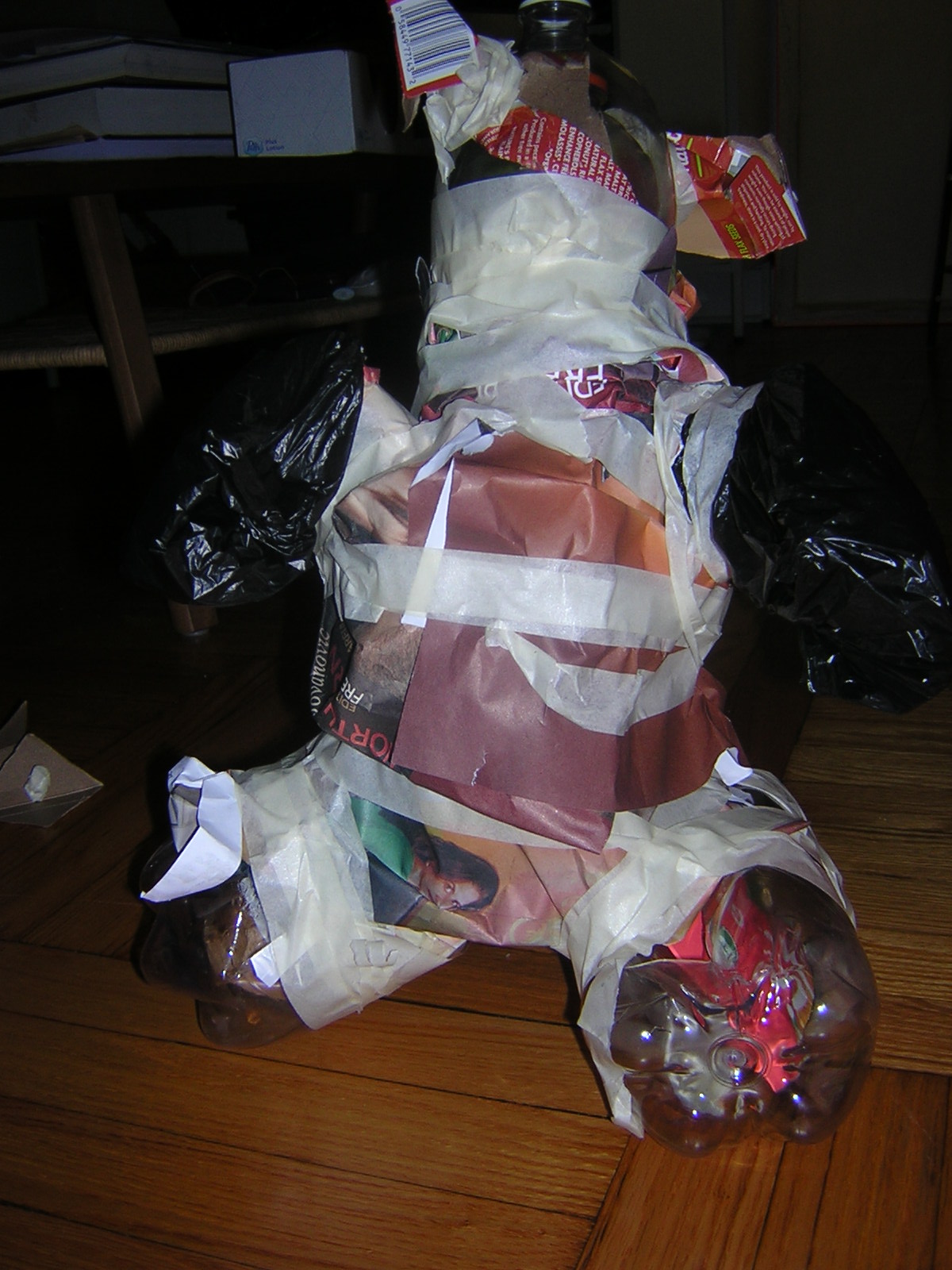
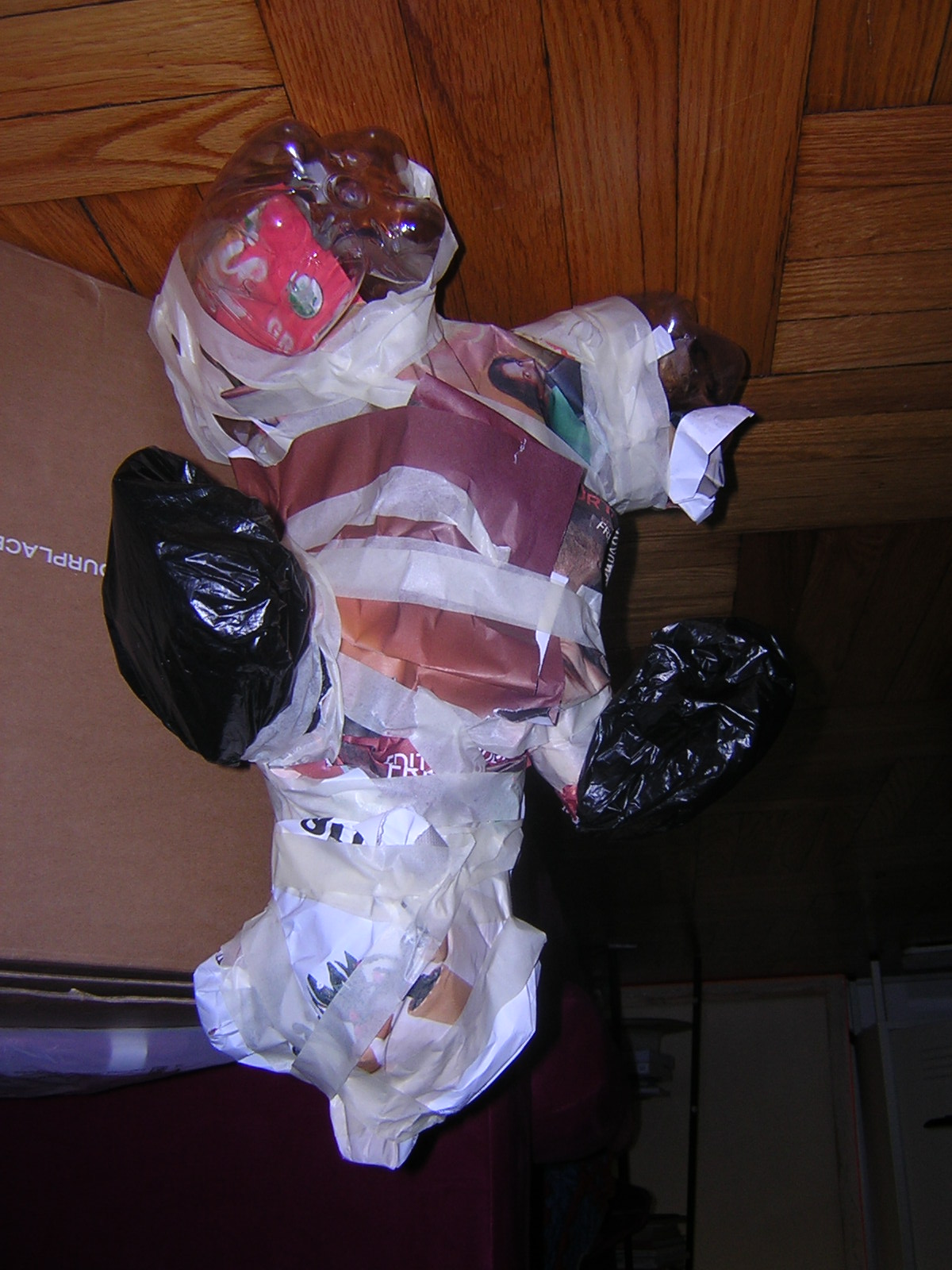
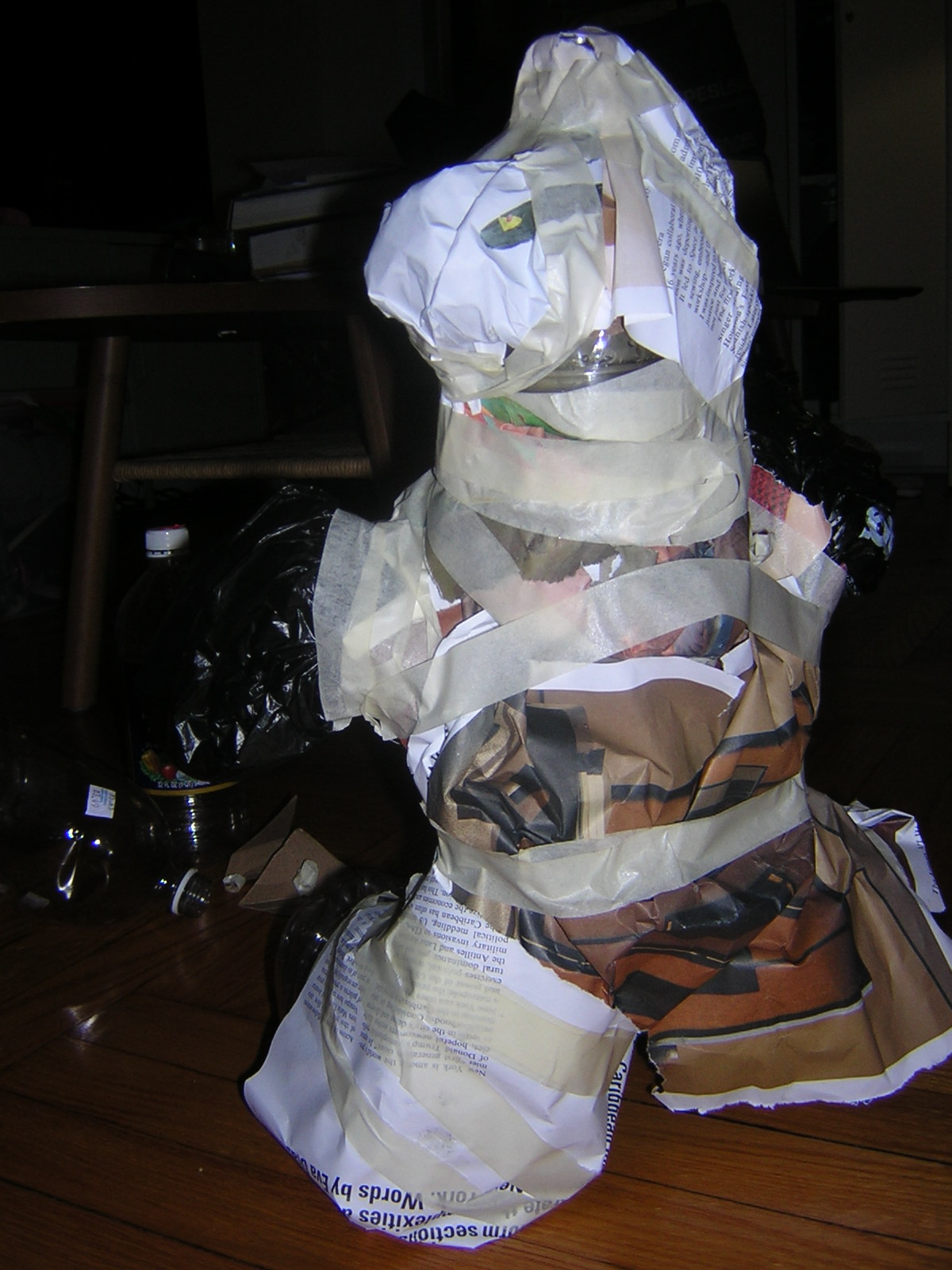
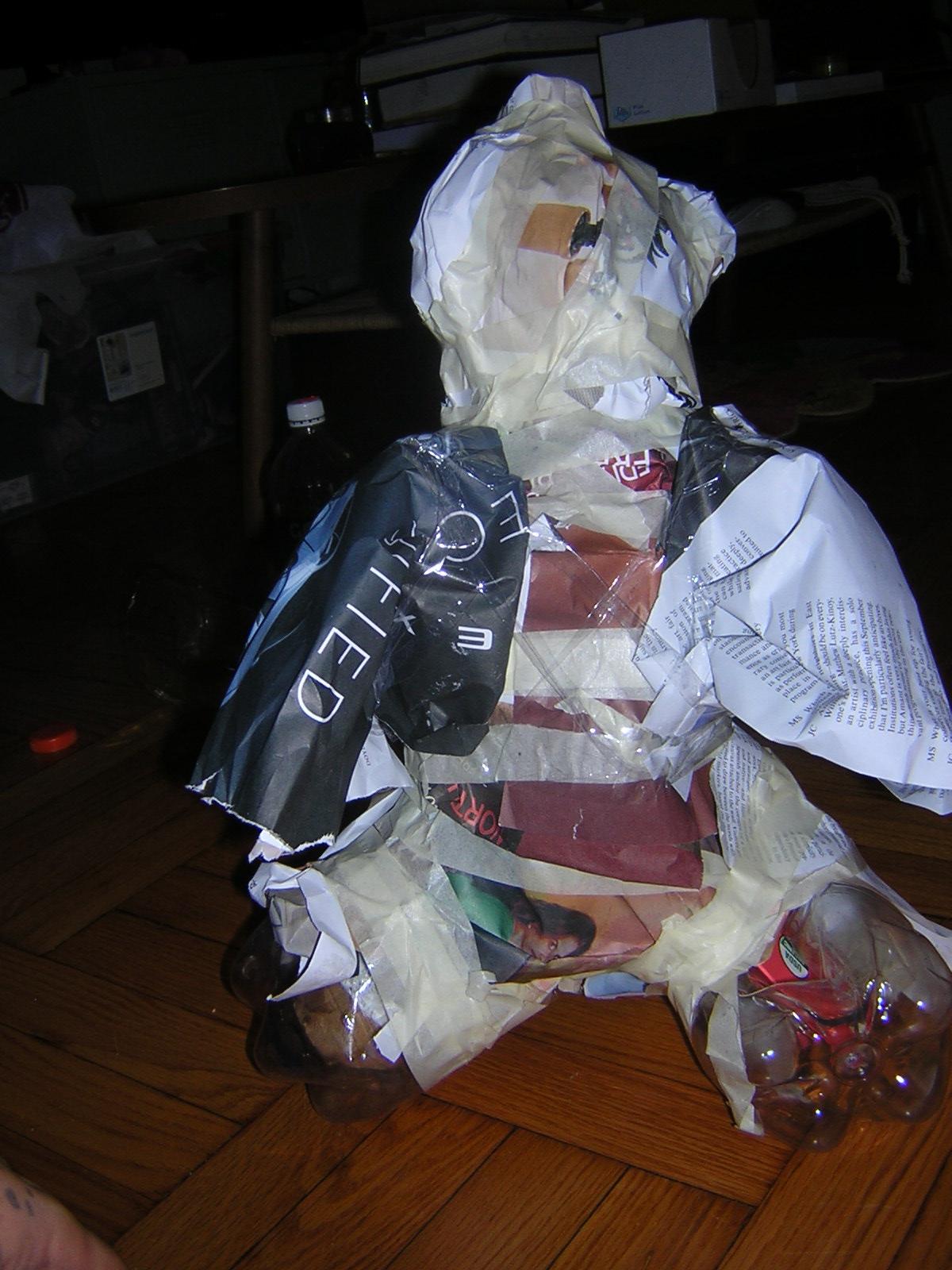
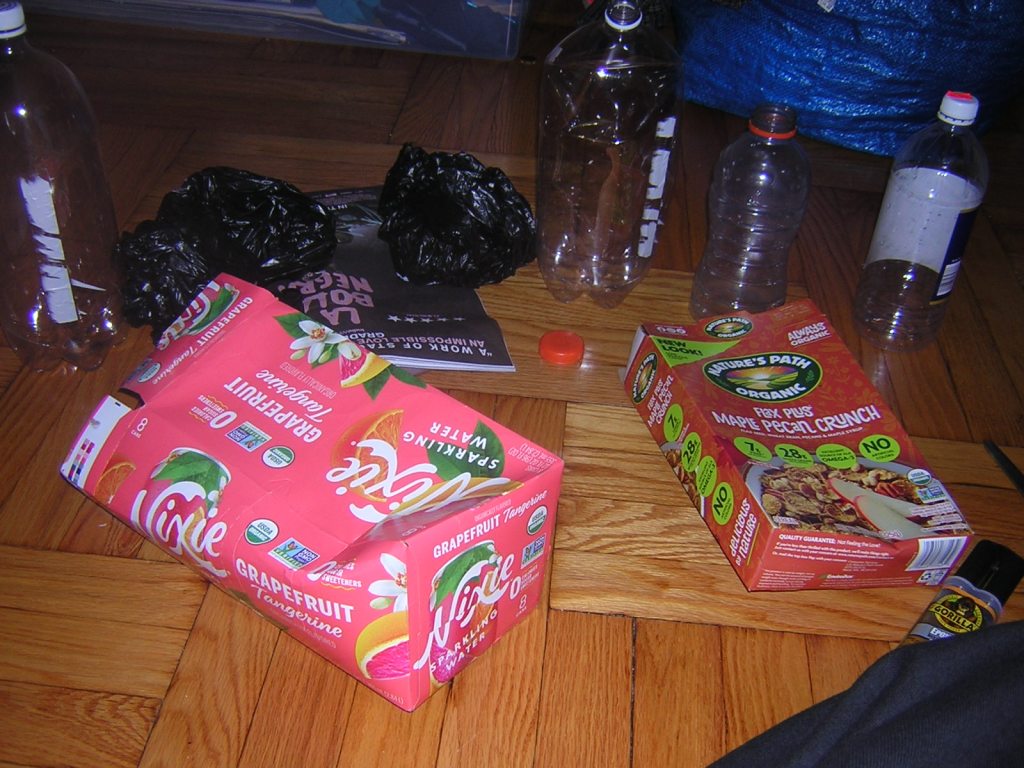
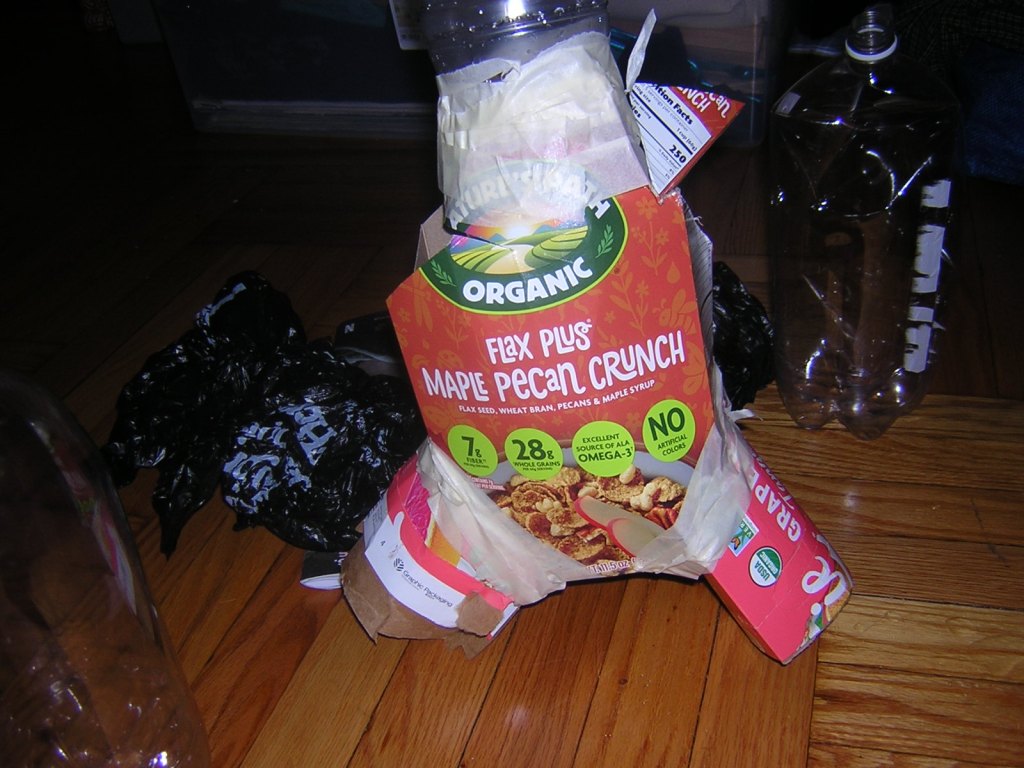
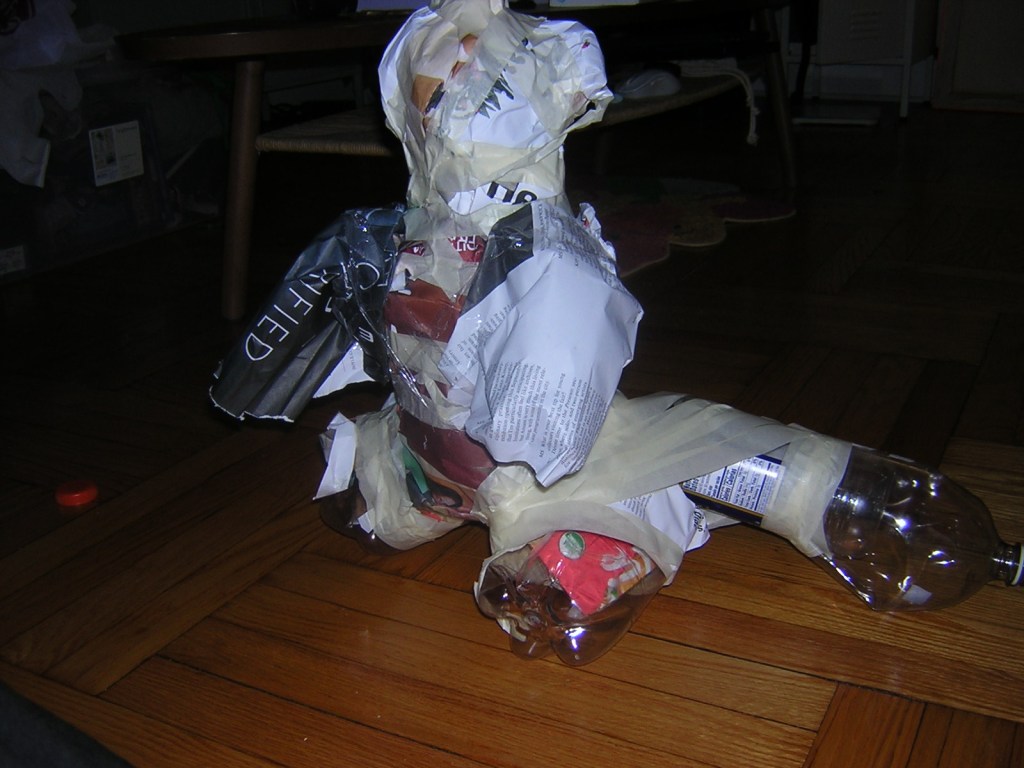
Focusing on sustainability and art as a focal point in my artistic practice and to achieve bullet points within the assignment I have utilized, paper, masking tape, cardboard, large bottles of seltzer and more paper. A paper magazine from freeze 2026 that was handed during the armory show. Creating an endangered animal out of everyday “trash” or as I like to refer to them as products, containers and used goods. I wanted to truly use my recyclables for this creation to in a way track what I have used in the past couple of weeks. In a perfect world, they would all be glass and paper, but in the 21st century it is plastic as well.
Targeting Red Pandas in this creation as my endangered species of interest. I have always been infatuated by Pandas, their life, how they raise their young in the most humorous sense.I saw them as simple, with no evil in their hearts. The first time I understood animals was when I saw a panda. I understood how there is no concern about who is looking or them putting effort to try and impress someone. “The red panda is slightly larger than a domestic cat, with a bear-like body and thick russet fur. The belly and limbs are black, and there are white markings on the side of the head and above its small eyes. Red pandas are very skillful and acrobatic animals that predominantly stay in trees. Almost 50% of the red panda’s habitat is in the Eastern Himalayas. They use their long, bushy tails for balance and to cover themselves in winter, presumably for warmth. Primarily an herbivore, the name panda is said to come from the Nepali word ‘ponya,’ which means bamboo or plant-eating animal.”
Red pandas in specific are a mix of a cat and a bear in how I see them, their life consists of them existing in lower temperatures and due to how humans have embarked onto nature to further exploit trees, plants; Red Pandas are endangered. “Almost 50% of the red panda’s habitat is in the Eastern Himalayas. The loss of nesting trees and bamboo is causing a decline in red panda populations across much of their range because their forest home is being cleared.”
Red Pandas also have a red bushy tail that they rely on for warmth and to balance on tree branches. Tending to live alone, with a diet consisting of bamboo and leaves with the occasional fruit, insect and egg snack. (Where Do Red Pandas Live? Explore Red Panda Facts | WWF)
Red PANDAS’ population is quite diverse with Himalayan and Chinese origins roaming in distinct clusters “The Chinese population possessed 38 unique haplotypes, while the Himalayan population harbored 25 (Figure 11a). Three haplotypes (H1, H7, and H6) were shared between the Bhutan and Indian populations, suggesting historical gene flow between the two countries (Fig. 11 b). Interestingly, one haplotype from Tibet (H28) also clustered with the Himalayan red pandas (Fig 11c)”. (CHAPTER 3 Results 3.1. Mitochondrial Markers 3.1.1. DNA Extraction and PCR Amplification Success, PG 20, RED PANDA STATUS IN BHUTAN National Red Panda Survey Report 2023)
Study shows through vast population spread in Red Pandas their DNA can be seen in sub-populations and ancestry of animals in their surrounding areas. “4.3. Insights into Population History The study provides evidence for historical gene flow within Bhutan’s red panda population. Shared haplotypes identified across different regions suggest past connectivity and exchange of genetic material between subpopulations. Additionally, neutrality tests and the mismatch distribution curve, which analyze the patterns of mutations within a population, indicate relative stability in population size. This implies the absence of any major recent population expansions.” (CHAPTER 4 Discussion and Management Recommendations, PG 31, RED PANDA STATUS IN BHUTAN National Red Panda Survey Report 2023)
With efforts to try and save the Red Pandas, advancements in studying their DNA have become less invasive and dependent on their waste. “On-invasive genetic analysis of scat offers a powerful tool for long-term monitoring of red panda populations. This method is particularly effective for assessing abundance, distribution trends, and even genetic health. Camera traps, a mainstay in wildlife monitoring, have limitations when it comes to detecting small and cryptic mammals like red pandas. Their arboreal habits further reduce their chances of being captured on camera. A recent study in western Bhutan using camera traps at 60 stations over 11 months only photographed red pandas in 1% of locations (NCD 2022). In contrast, our scat sampling approach yielded significantly more data. We collected 482 samples from 666 grids (2km x 2km), with red panda presence confirmed in 158 grids (350 positive samples). An additional 82 red panda samples were collected outside the grids but within close proximity.” (CHAPTER 4 Discussion and Management Recommendations, PG 33, RED PANDA STATUS IN BHUTAN National Red Panda Survey Report 2023)
Further creating a safe habitat for The Red Panda to roam free and continue to populate without the distributions of human life. There have been efforts to create habitats and understand their past declines. A historical study The Red Panda’s areas to further insight what to implement to provide a connectivity between rehabilitation and connectivity in mentoring their population growth.

