Leftovers: For the creative (MENU)
How can we look and organize our surroundings for the means of creation, discovery and release? “Love your trash” as a palette starter focused on a PRACTICE, I am personally familiar with where the emphasis on material access can shape our surrounding environments. How much can we explore from scraps? “Love your trash” focused on produce LEFTOVERS, A discovery of how the everyday can become a personal library of how we live everyday life, an assessment of errands, shops movements, places of support and even as simple as resources we use. The artificial encasing of our food as it pertains to “Love your trash” where the artificial is all plastic/paper that encases freshly grown produce, without understanding what labor impacted the encased product. It is content we are interacting WITH; a story we are pursuing in order to serve convenience.
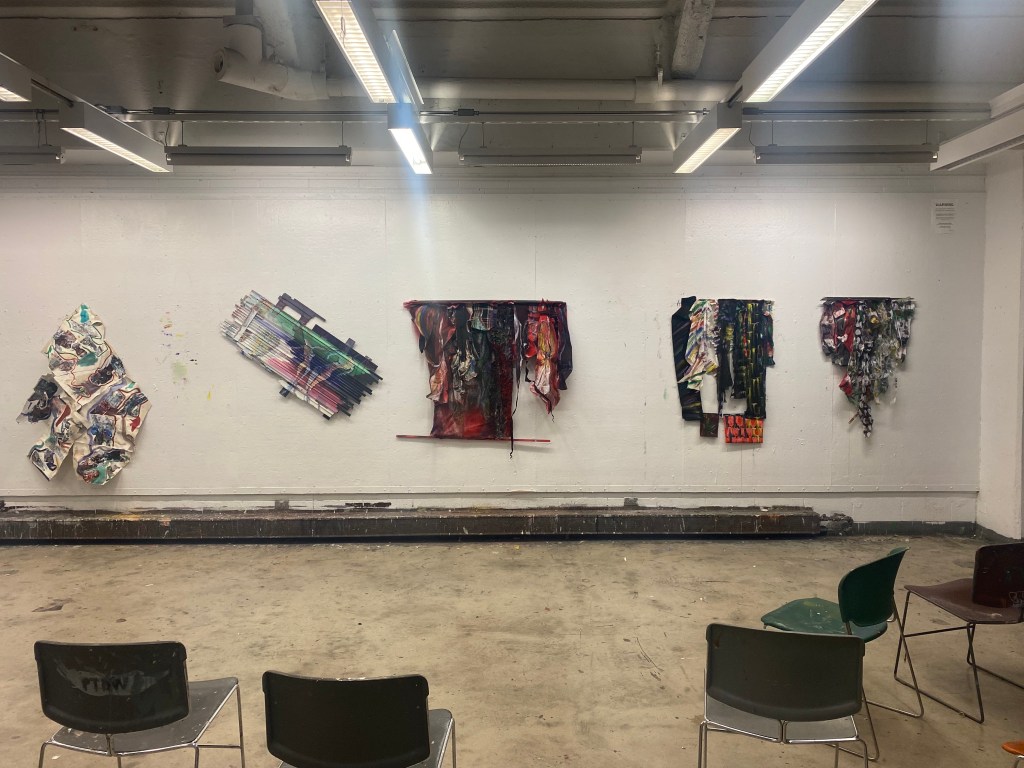
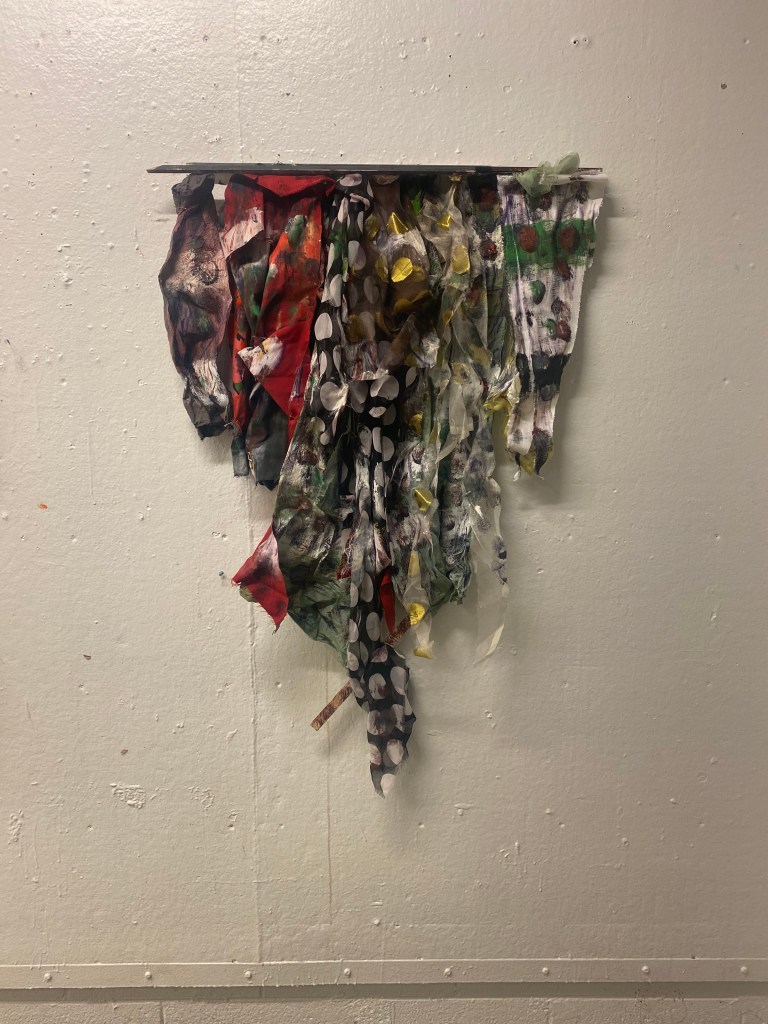
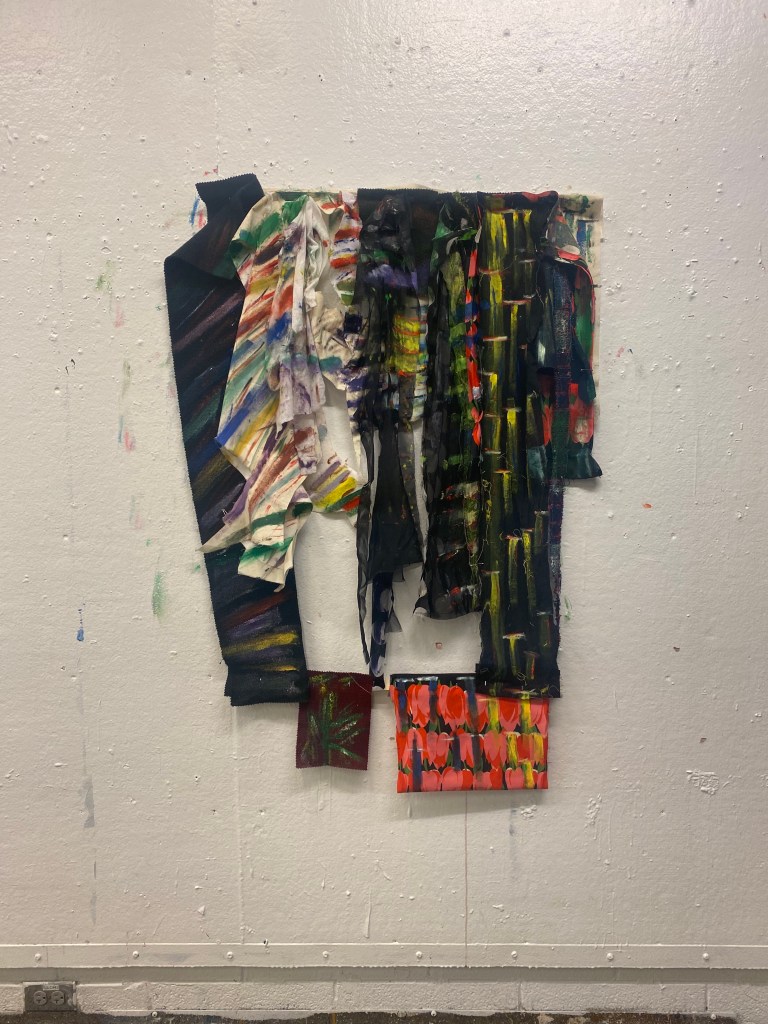
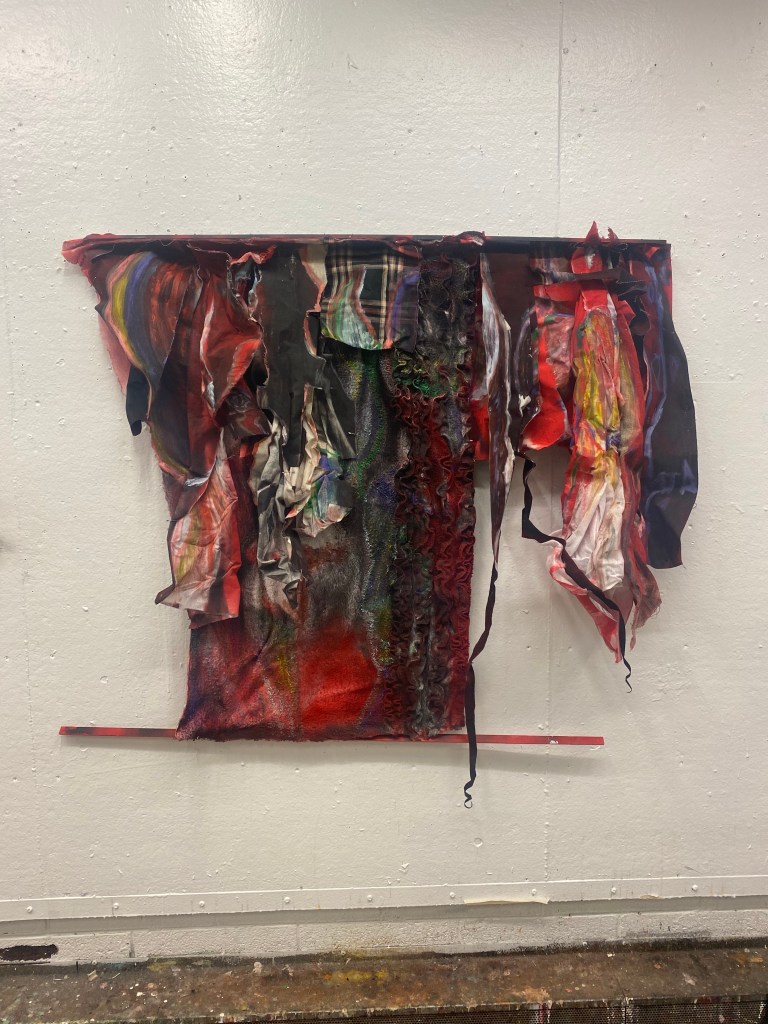
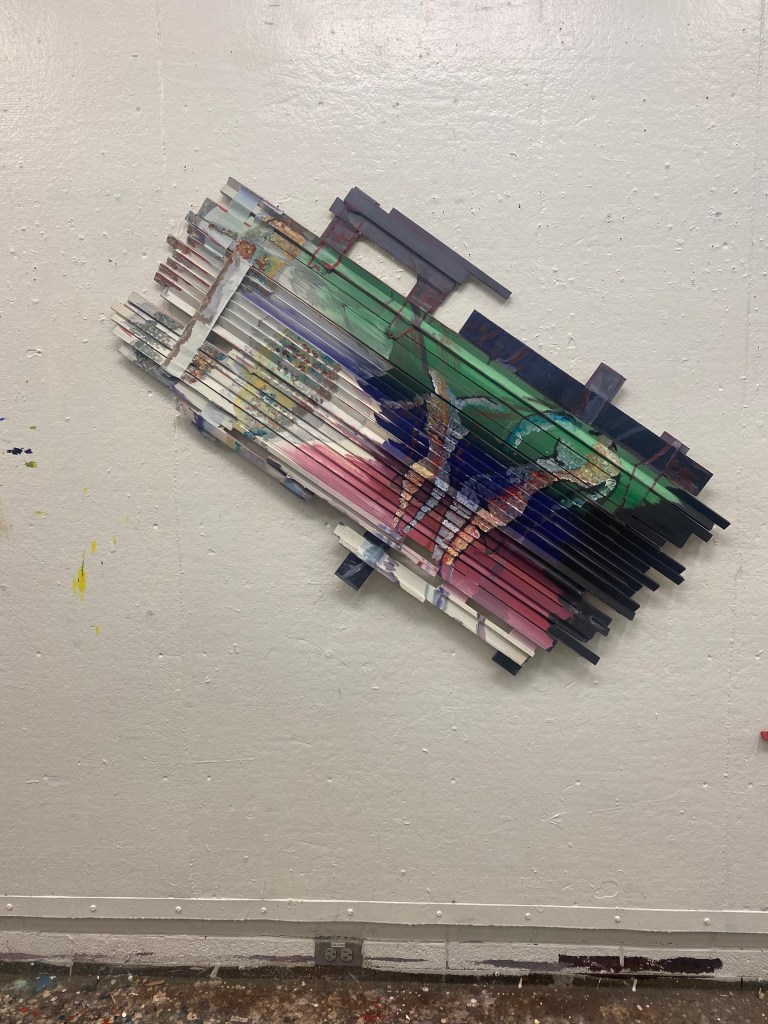
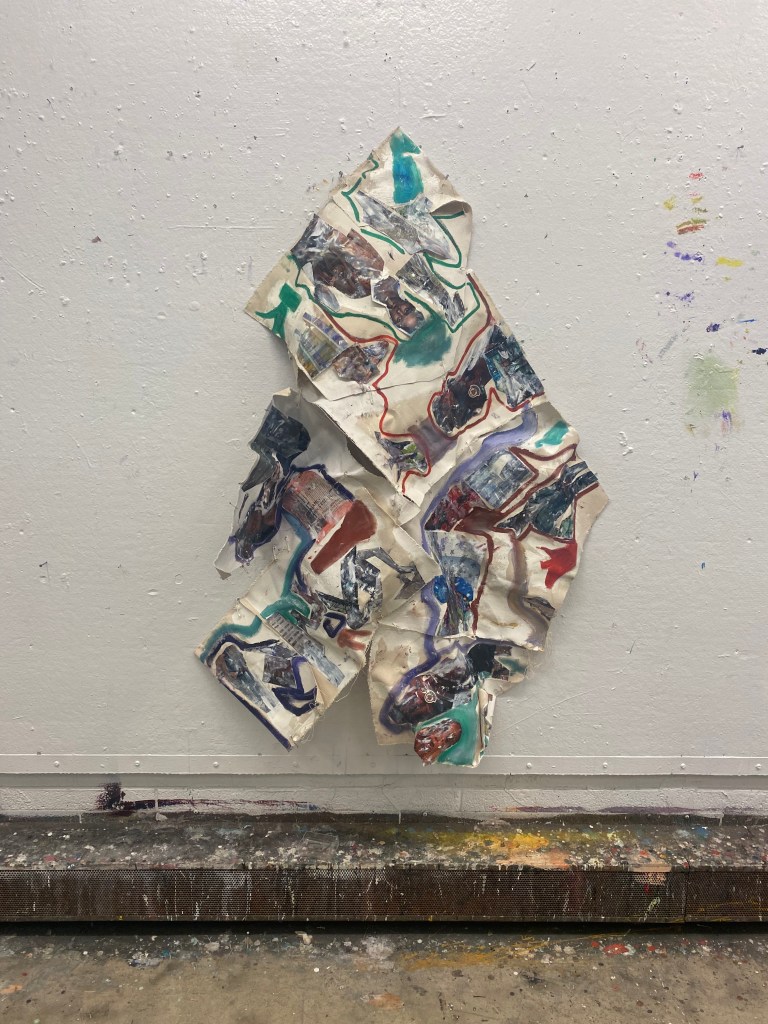
Plastic encasing can communicate: Freshness, preserved, clean and safe for human consumption, because it is part of the architecture designed for us to consume. Thinking of what packaging exists is a discussion left for product designers, not to be questioned by consumers. We are here to obey our advertisers, even if the artist is the creator behind the item consumed. What will it mean when the day of mass consumption ends? How will we survive without the artificial? I always wondered about an isolated world, where the creator can establish a form of currency abandoning principles of mass production and how we “reuse” “recycle” and “transfer”. Through my personal artistic journey I utilized “scrap” materials to further establish a question of stories written on “scraps” how I wanted to hold discarded fibers and interact with them to further establish an informed artistic practice.
During 2022 to 2024 I worked in the school of the art institute of Chicago and I attended classes in a variety of mediums. Every department had their own set of discarded materials from metal to fabric and acrylic paint, I found it fascinating since I never before had access to trash from a variety of sources where I used to collect all of the scraps in a laundry bag as I moved from one department to the other trying to repurpose material, instead of insisting on buying anything “new” I tried to consume as little as I possibly could for the sake of my practice, values and morals I held myself to.
Proven to be a difficult task to create with what was left, I observed how the student population insisted on having to prove materials that shined had a higher value and my creation of a wooden fabricated piece was deemed as less than, because I did not purchase my materials. The first set of paintings I created in the school of the art institute of chicago’s painting department were from fabric scraps I found in the fashion department. In its symbolism I wanted to find my identity as an artist, I moved states, cities and countries trying to cope with how to form identity politics into a palatable product. In its advertising: a creation to be consumed by artistic masses and critics. I romanticized the scraps found, the cuts on the material, the way they were shredded and how natural fibers appeared after they were consumed and left in the trash to flood landfills abruptly. I understood the materials as soft with life waiting to be explored, told about and wanting to be identified of value. Art schools teach the artist to disrupt the state’s quota, yet the encouragement was to keep feeding principles of the past without utilizing historical context in creation. Why should we buy in the most mass production era we are living in?
The artist’s responsibility is to tell a story from what once was forgotten (to my understanding and values). Discussing how it can perform an evoking of the human experience beyond what we were brought up to uphold. A colorful scheme to ease human suffering, a musical instrument used to write a personal love letter to the artist’s audiences. It is never easy to continue practicing as economic stress persists in our existence, but if not drive for change and wellbeing, then what is the goal?

