Fly Now
The National Air and Space Museum Poster Collection
“Throughout their history, posters have been a significant means of mass communication, often with striking visual effect. Wendy Wick Reaves, the Smithsonian Portrait Gallery Curator of Prints and Drawings, comments that “sometimes a pictorial poster is a decorative masterpiece-something I can’t walk by without a jolt of aesthetic pleasure. Another might strike me as extremely clever advertising … But collectively, these ‘pictures of persuasion,’ as we might call them, offer a wealth of art, history, design, and popular culture for us to understand. The poster is a familiar part of our world, and we intuitively understand its role as propaganda, promotion, announcement, or advertisement.”
Reaves’ observations are especially relevant for the impressive array of aviation posters in the National Air and Space Museum’s 1300+ artifact collection. Quite possibly the largest publicly-held collection of its kind in the United States, the National Air and Space Museum’s posters focus primarily on advertising for aviation-related products and activities. Among other areas, the collection includes 19th-century ballooning exhibition posters, early 20th-century airplane exhibition and meet posters, and twentieth-century airline advertisements.
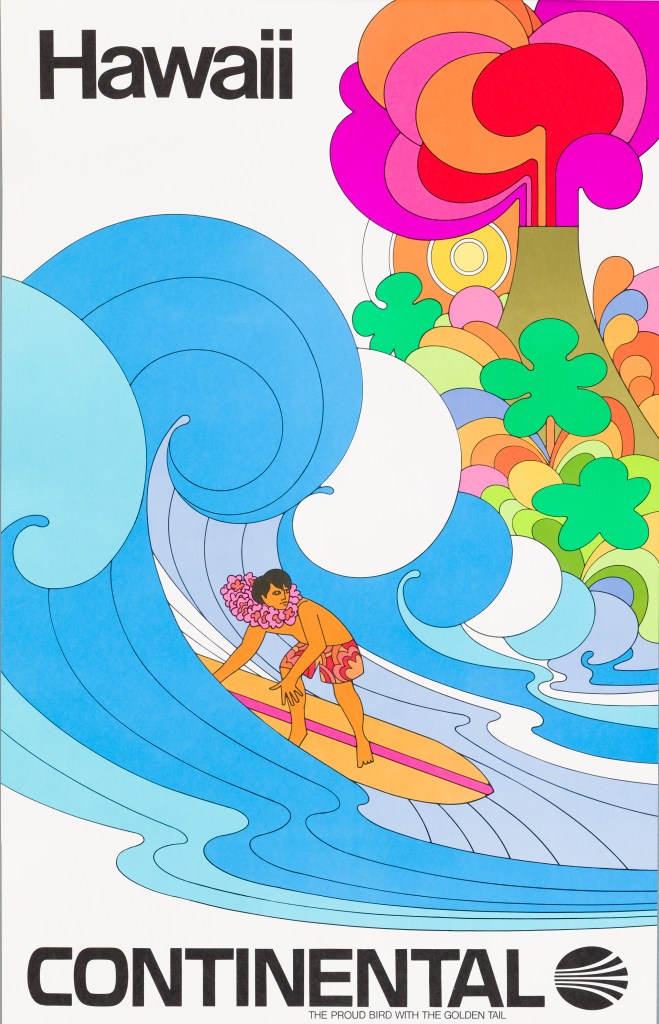
The posters in the collection represent printing technologies that include original lithography, silkscreen, photolithography, and computer-generated imagery. The collection is significant both for its aesthetic value and because it is a unique representation of the cultural, commercial and military history of aviation. The collection represents an intense interest in flight, both public and private, during a significant period of its technological and social development.” (Smithsonian National Air and Space Museum, Continental Hawaii)
Thinking of finding what the image presents, maybe not relating it only to historical context, but also to what effects can we analyze its environment and composition. What does it mean to look at a poster, image or an advertisement and think nothing of it? In the Hawaii continental advertisement photo we get to view an explosion of colors, vividly shining through in the background, while a surfer is moving through the waves as the figure is wearing a “lei” tanned without a care in the world. The poster dates back to 1969, which coincides with the explosion on Pearl Harbor (PEARL HARBOR, Hawaii, Jan. 14 — Explosions and fire swept the flight deck of the nuclear aircraft carrier Enterprise today, killing at least 24 crewmen and destroying 15 planes) (The New York Times, January 15th, 1969)
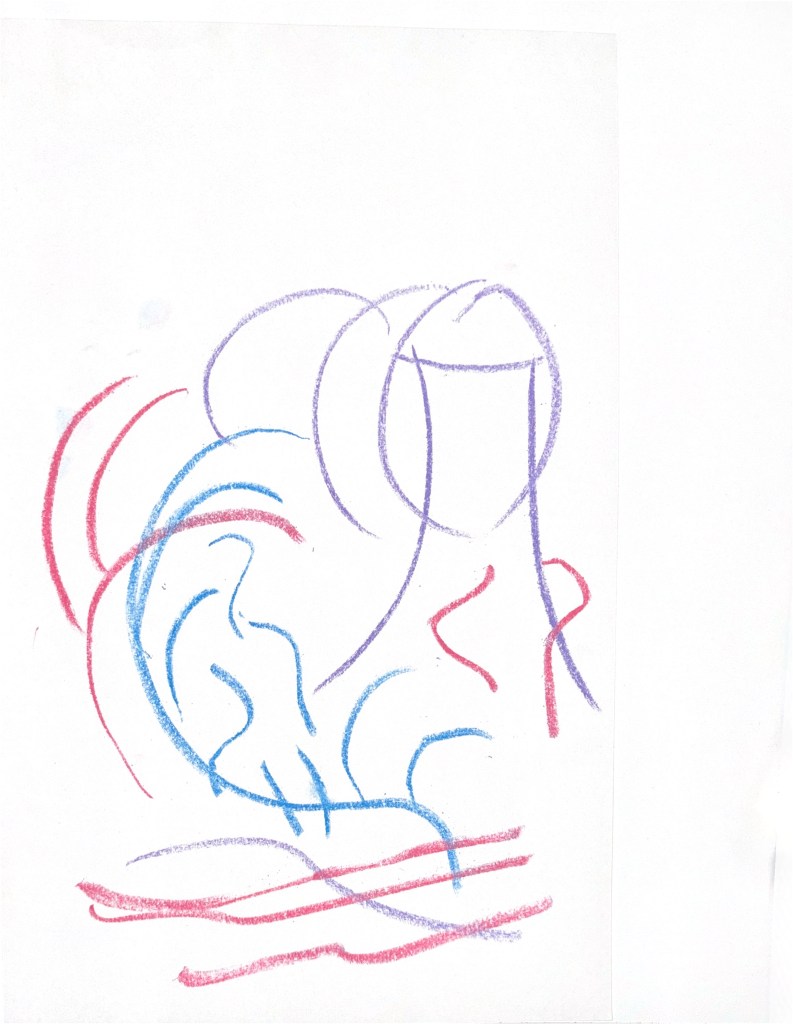
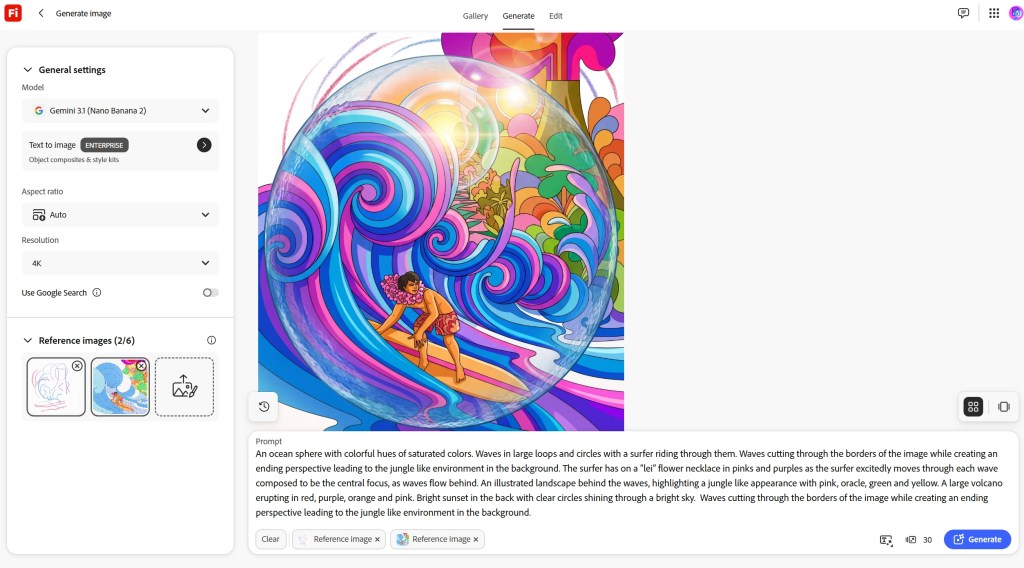
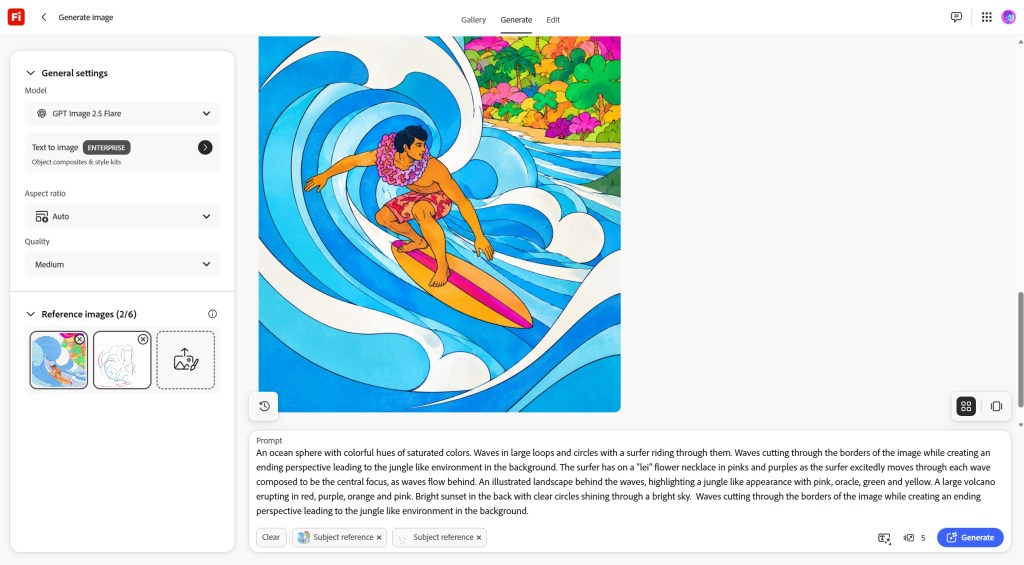
How did we reach psychedelic colorful illustrations about travel, after a nuclear explosion has occurred? Why would the waste in the water not affect us? I used the image as a start of representing polluted air and water (in my personal interpretation) . I used a prompt, AI generated images and a sketch to follow along with a representation of how we can see pollution in the ocean in current times. If psychedelic colors represented nuclear waste in 1969, then what can represent micro plastics, micro fibers in 2026?
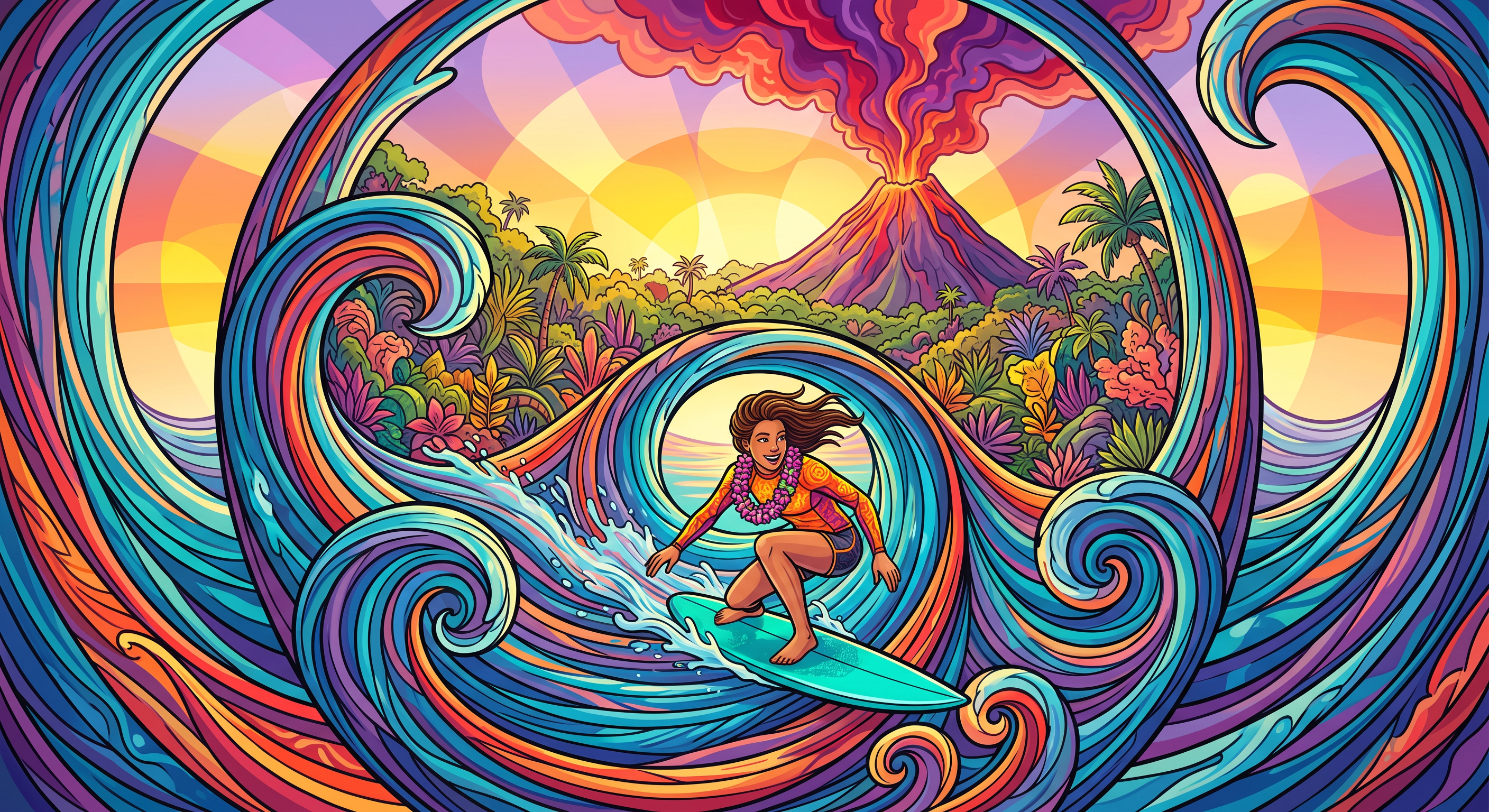
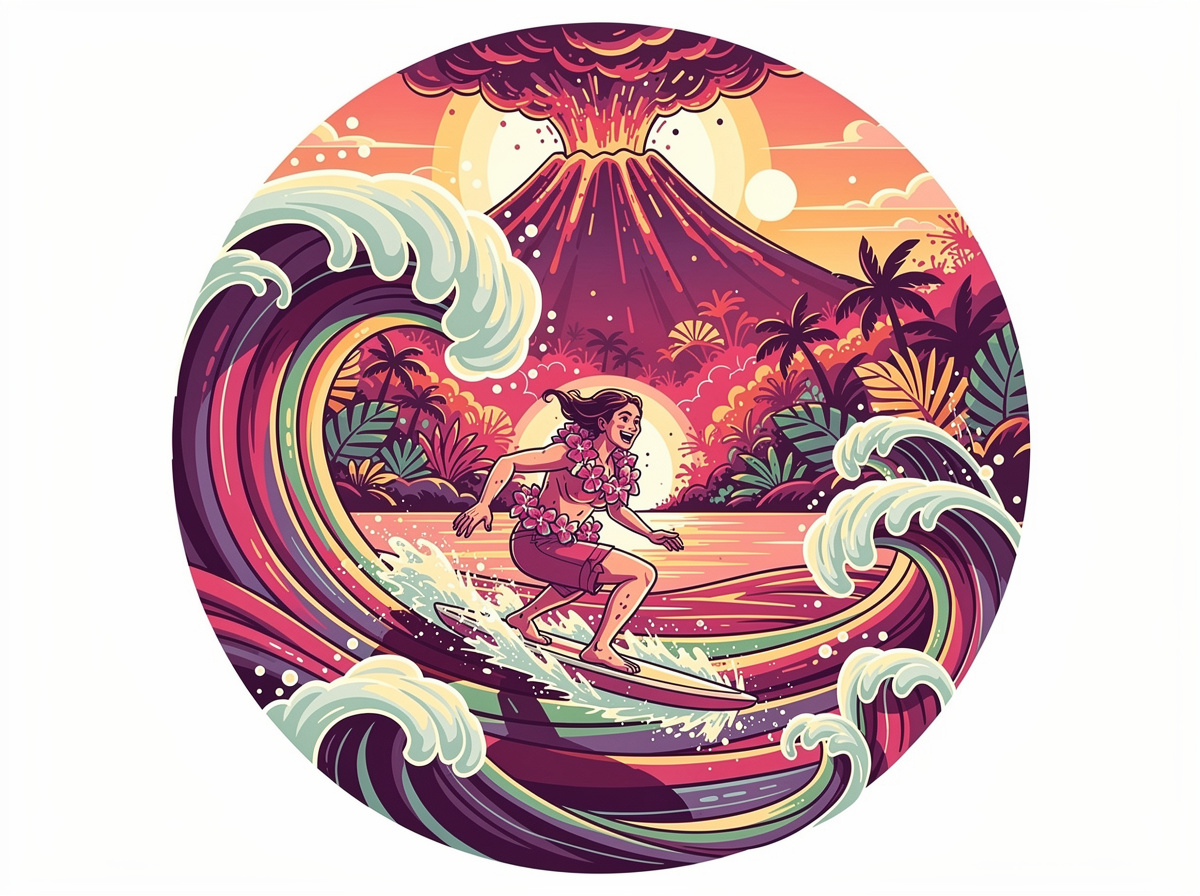
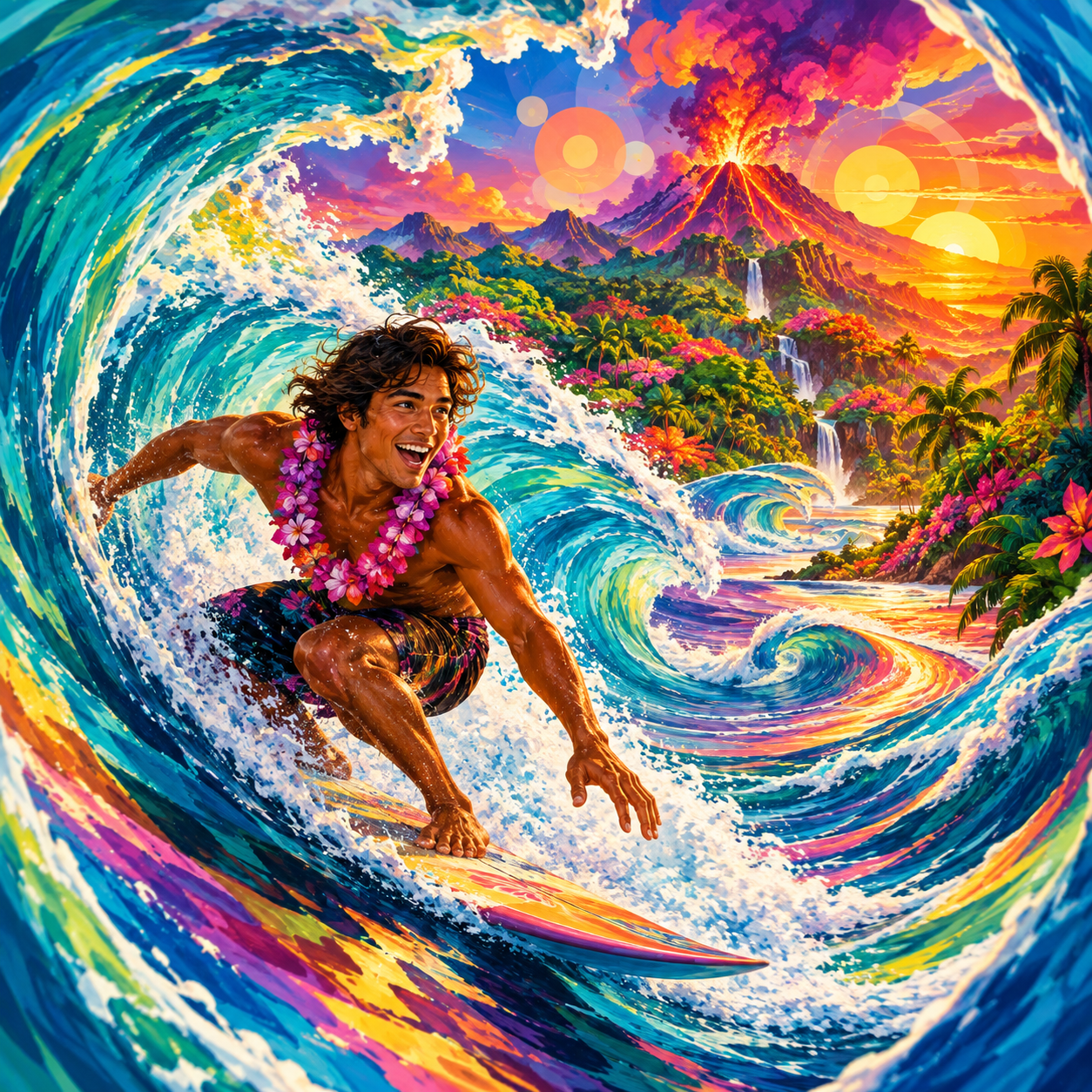
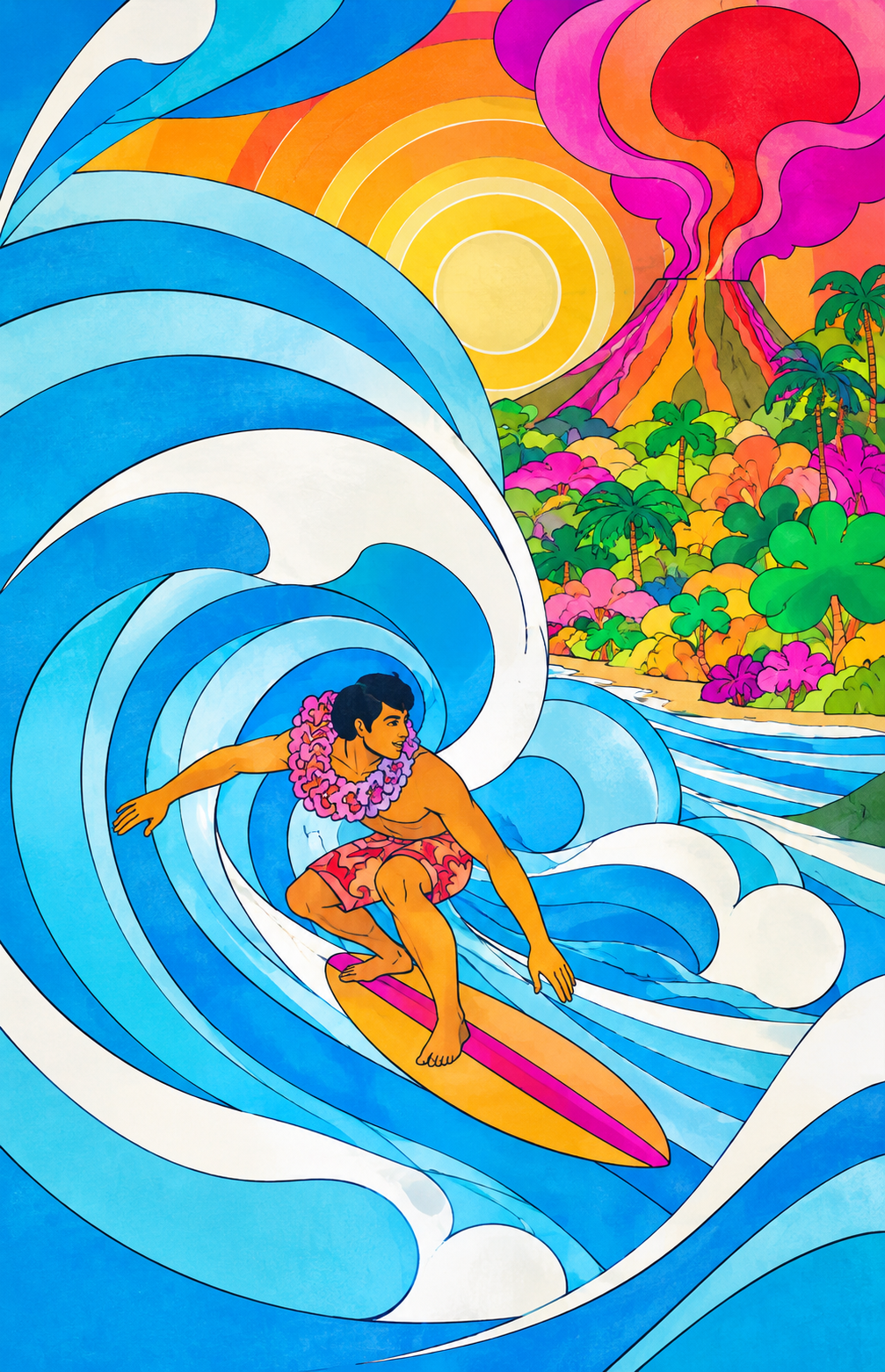
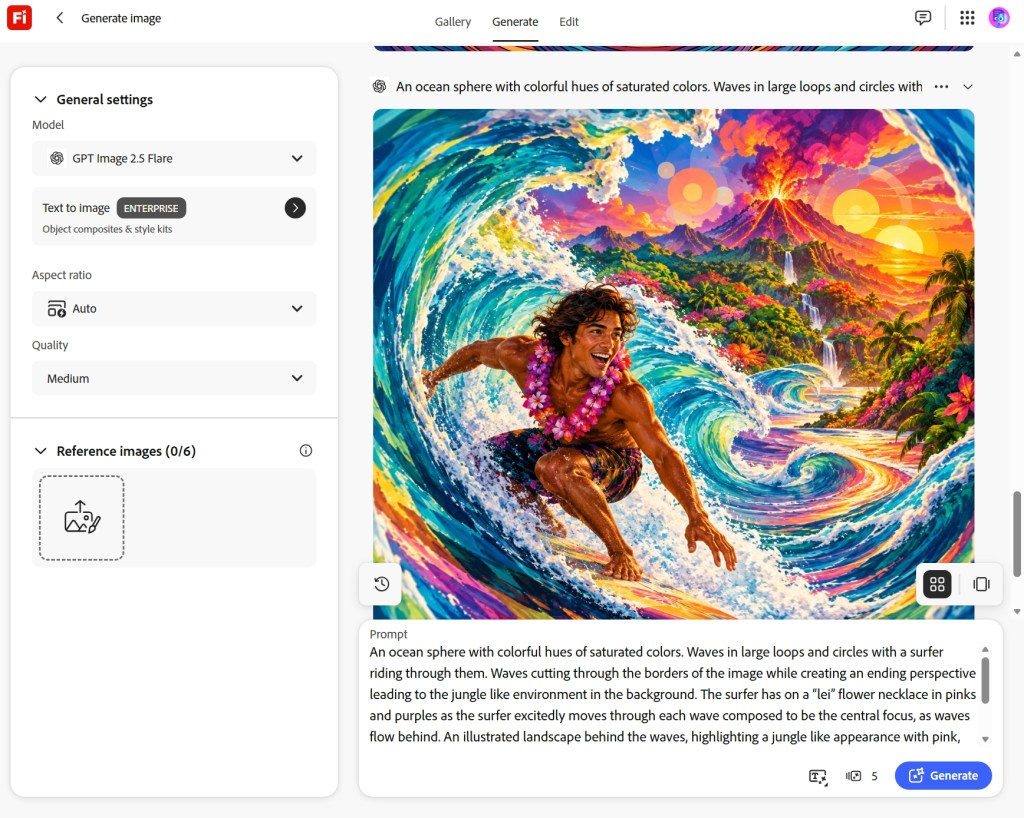
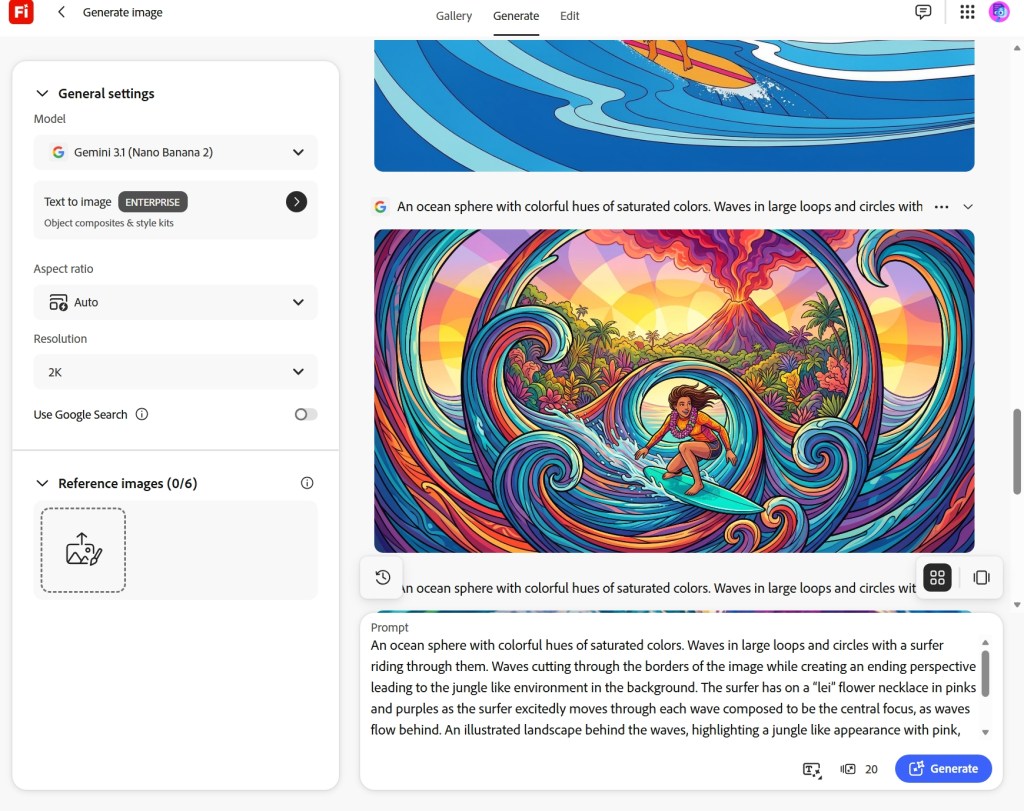
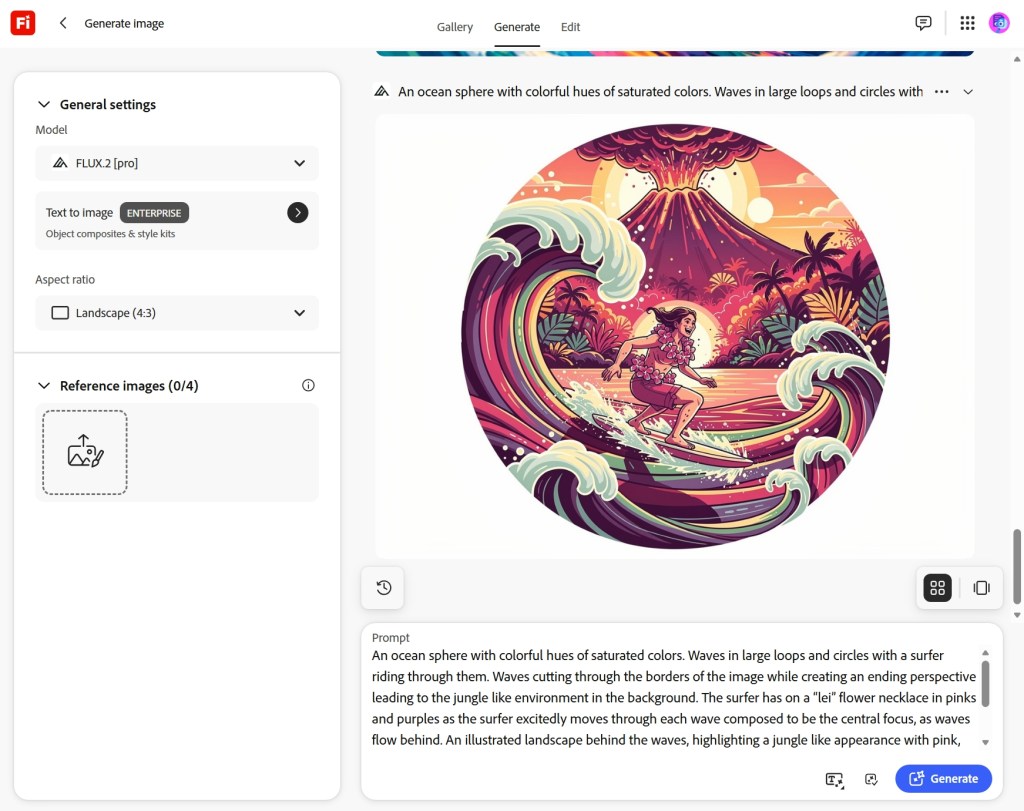
Using a simple sketch of how the movements occurring on the illustration are presented, the original poster and a prompt description of what I can recollect from the poster. The start seemed hopeful with an easy to understand prompt.
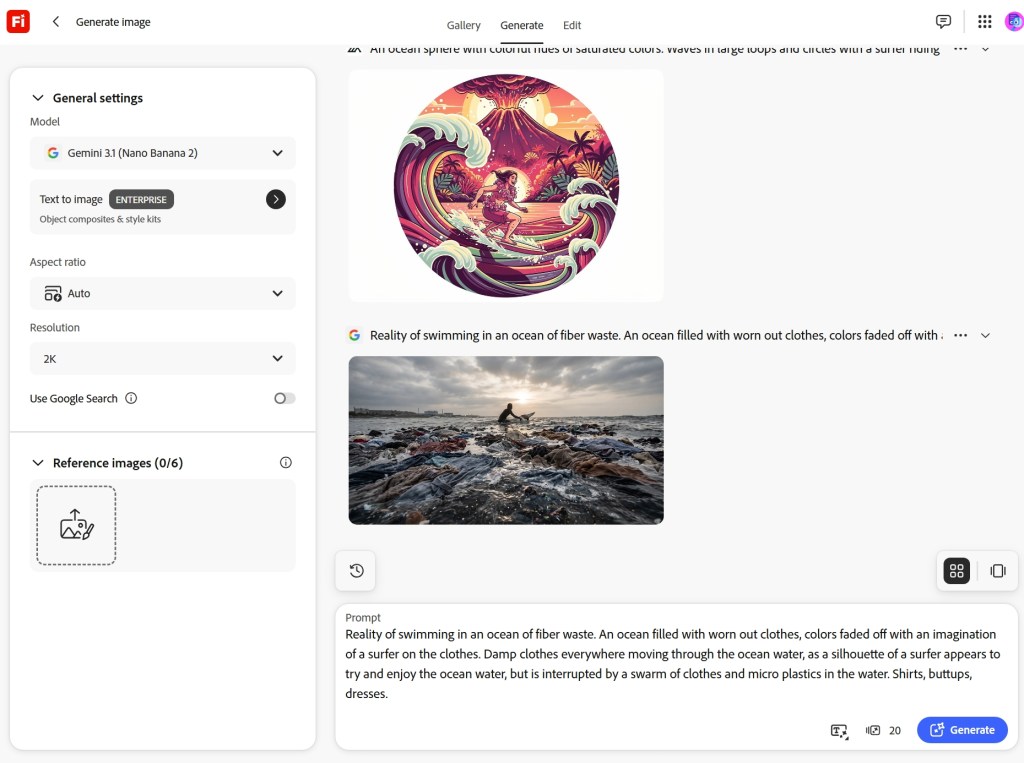
“Continental Airlines Hawaii Travel POSTER: AN ocean sphere with colorful hues of saturated colors. Waves in large loops and circles with a surfer riding through them. Waves cutting through the borders of the image while creating an ending perspective leading to the jungle like environment in the background. The surfer has on a “lei” flower necklace in pinks and purples as the surfer excitedly moves through each wave composed to be the central focus, as waves flow behind. An illustrated landscape behind the waves, highlighting a jungle like appearance with pink, oracle, green and yellow. A large volcano erupting in red, purple, orange and pink. Bright sunset in the back with clear circles shining through a bright sky. Waves cutting through the borders of the image while creating an ending perspective leading to the jungle like environment in the background.”
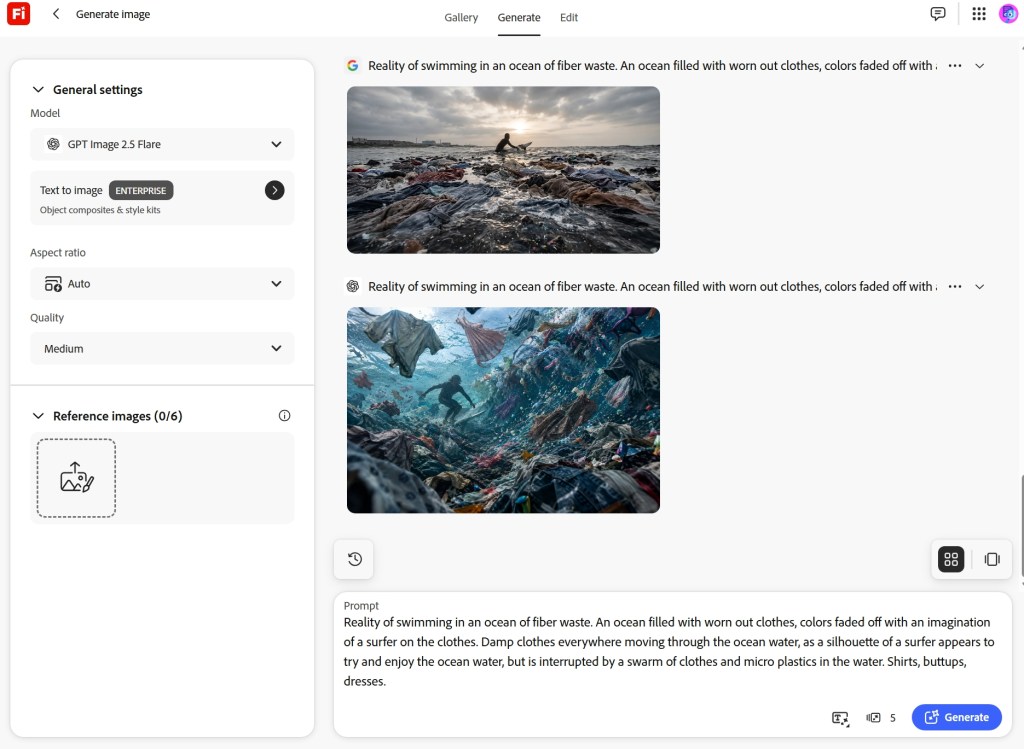
I started to add some of the current elements of swimming in an ocean of microplastics and fibers. Using a collage of a surfer swimming in clothes. With a prompt:
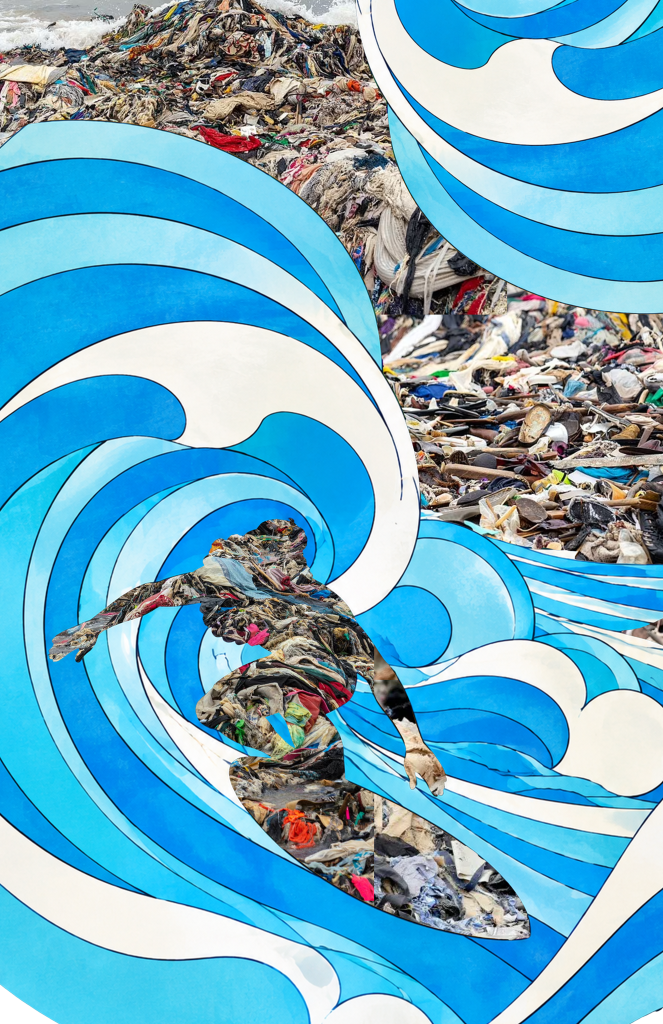
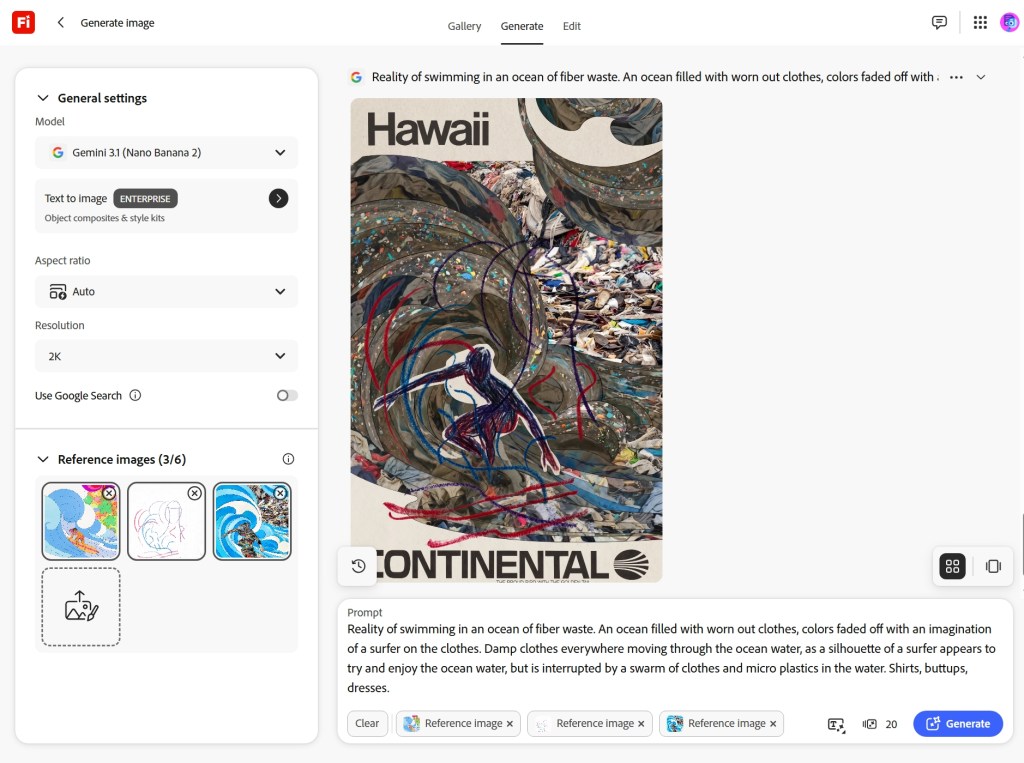
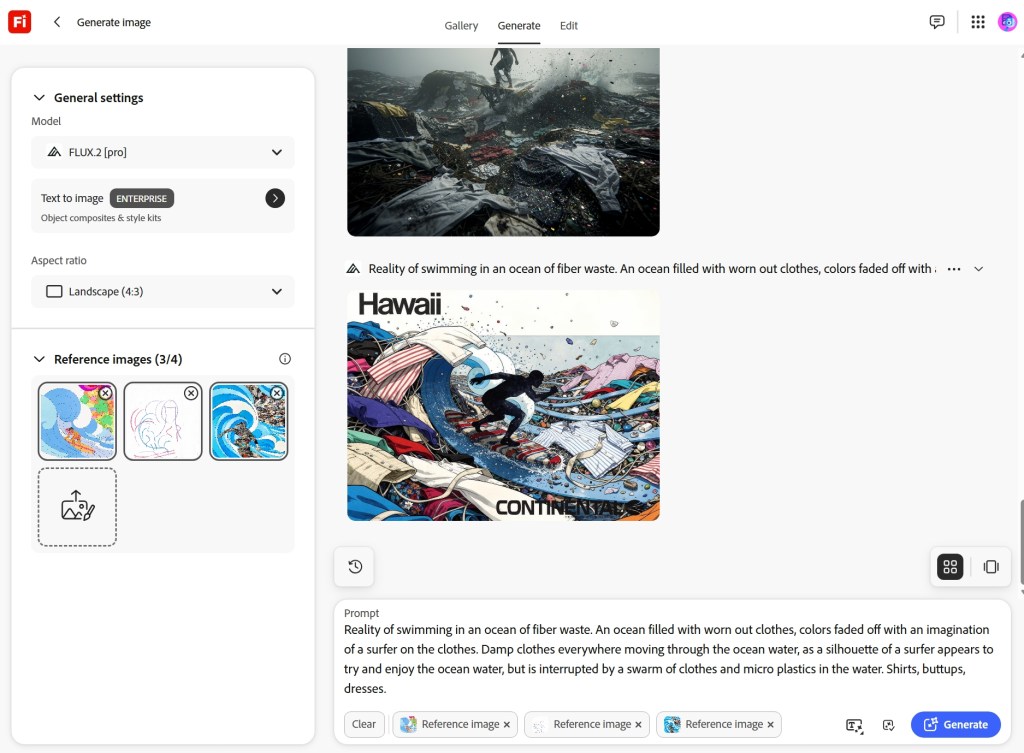
Reality of swimming in an ocean of fiber waste. An ocean filled with worn out clothes, colors faded off with an imagination of a surfer on the clothes. Damp clothes everywhere moving through the ocean water, as a silhouette of a surfer appears to try and enjoy the ocean WATER BUT is interrupted by a swarm of clothes and micro plastics in the water. Shirts, buttups, dresses.
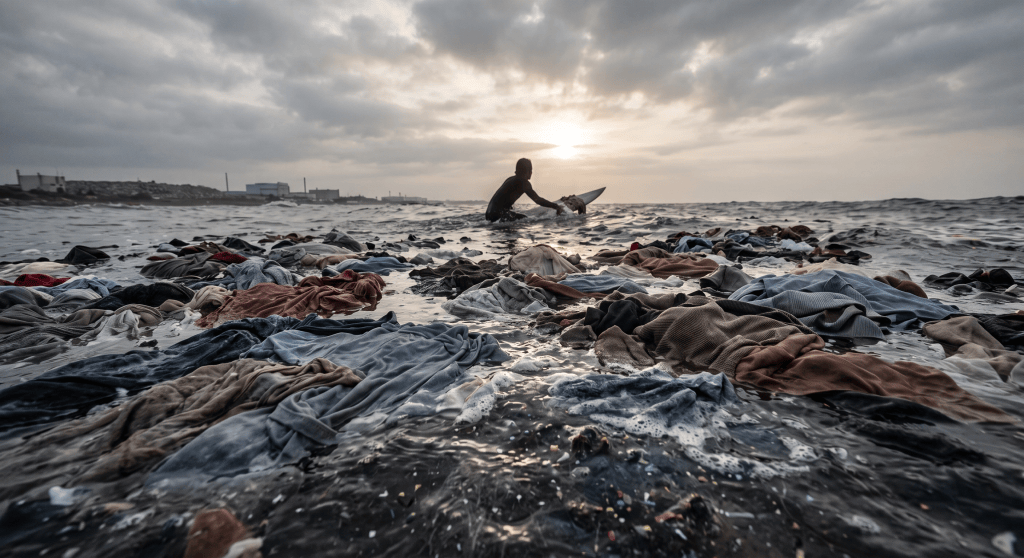
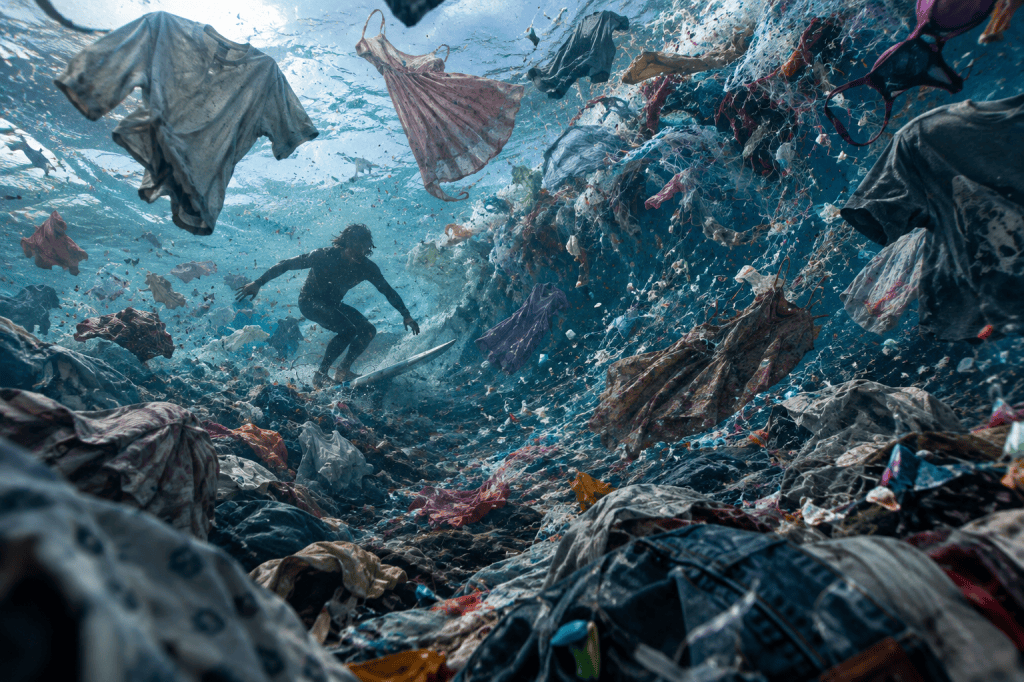
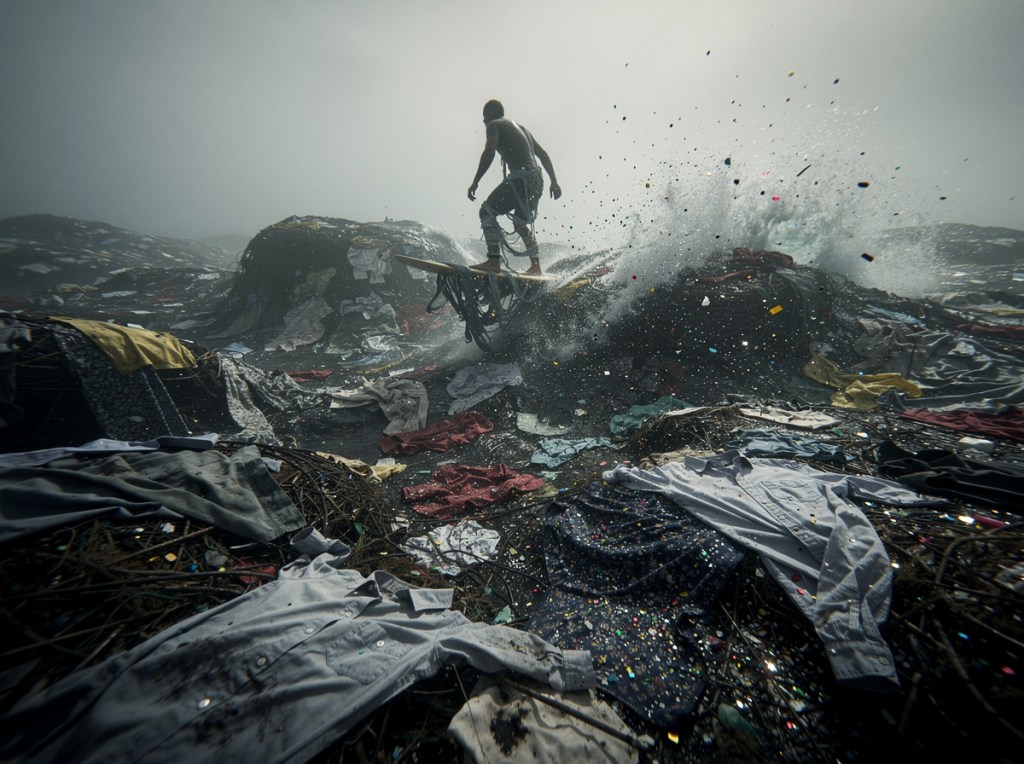
All three Gemini 3.1, GPT Image 2.5 Flare and Flux.2 (pro) took a serious interpretation of what I described. Everything turned grim and dark. The lens was hyper realistic, which that’s when I realized I did not describe a specific style or color variation, but I was curious to see if it was going to react to the previous images made, but to my surprise it became realistic. The images I used are from Ocean side in Ghana (James Town Beach) that has been a dumb for the Western world to use and AI picked it up. (Giant piles of Britain’s unwanted clothing wash up on foreign beaches: ‘Dead white men’s clothes’ are the new pollution hitting Ghana’s coast)
The combonation of all:
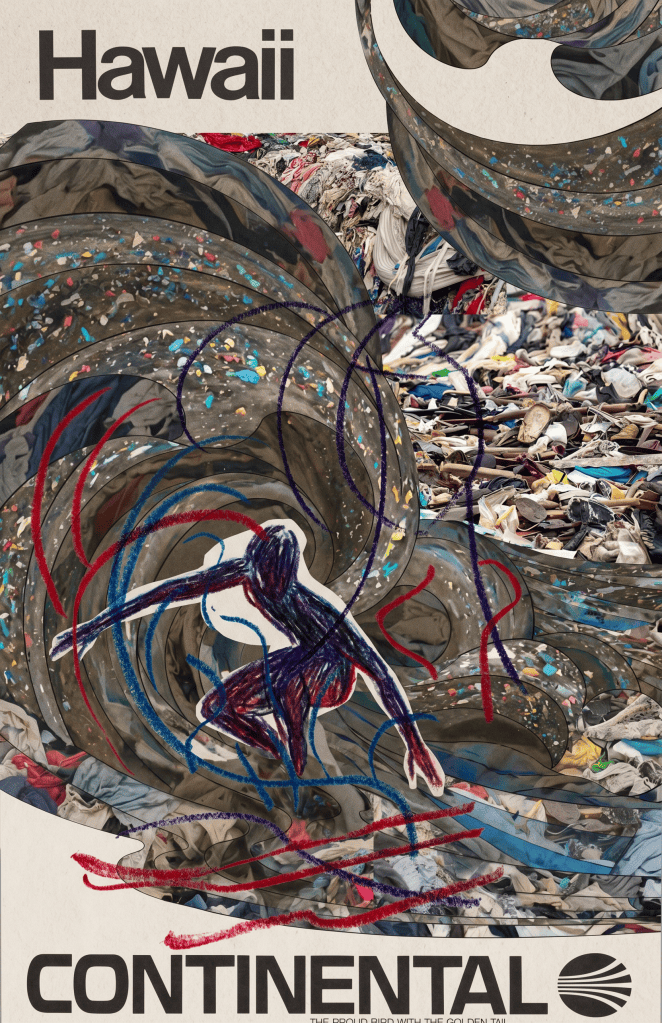
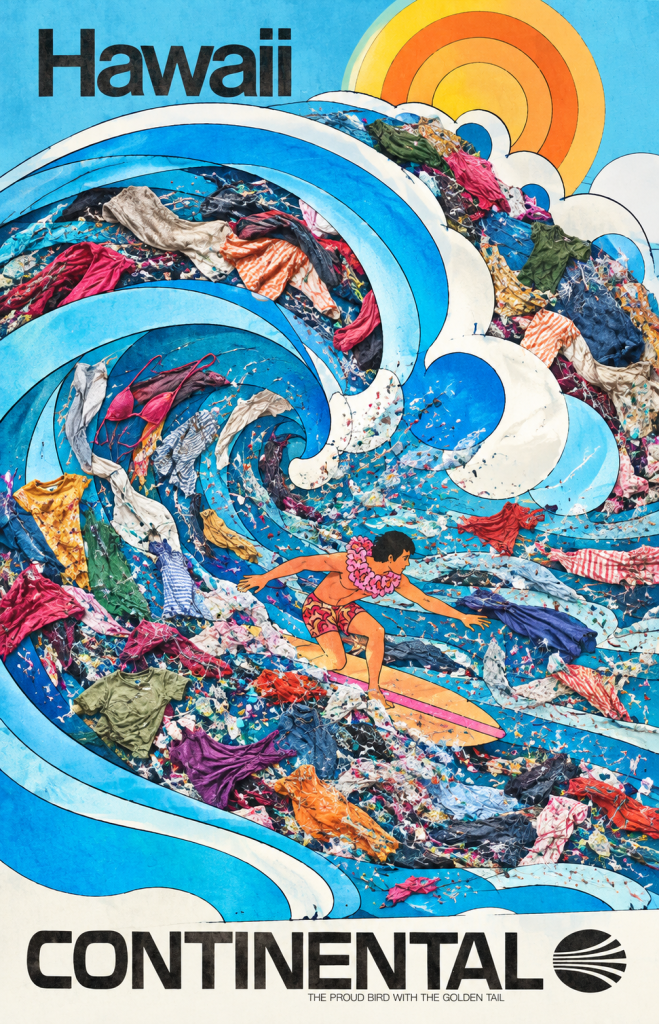
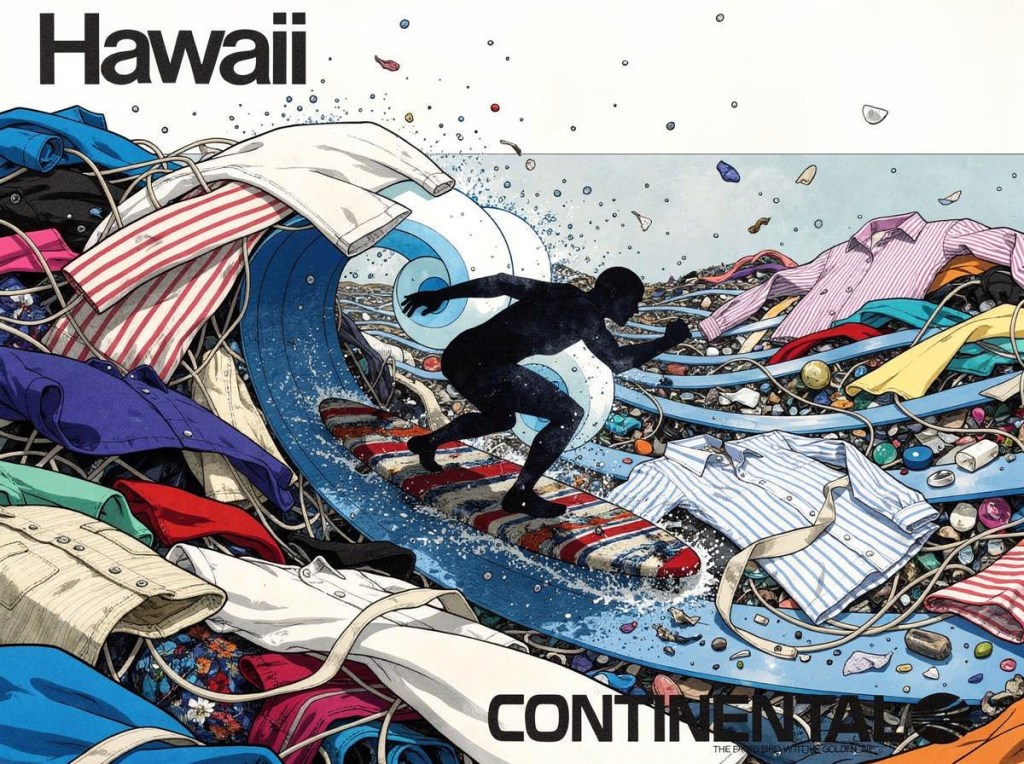
At the end the experiment created an analyzed overview of what I have been described and as expected AI machine learning was able to pick up and refeed what I have incorporated into its system. I am not a personal fan of AI nor will I use it to generate “Art” by any means, but great experiment, not loving the environmental impact, but I fulfilled to the best of my ability the experimentation process.
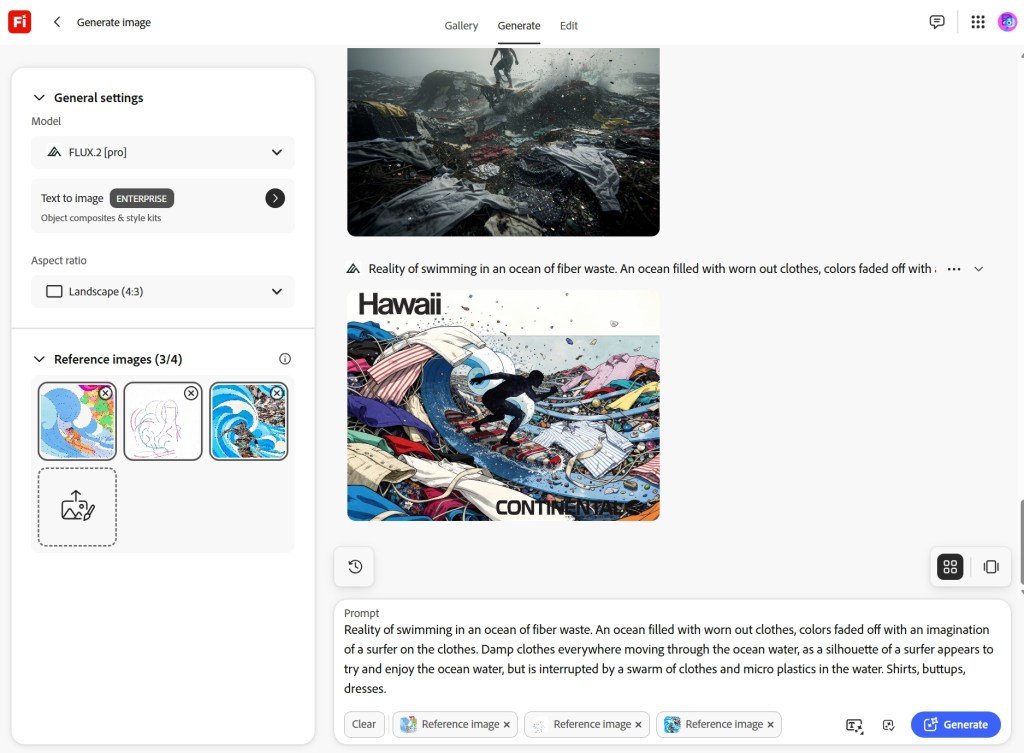
The documentation: